Daytime Education:
CSHH Student Advocates gathered at North Hempstead Beach Park for a hands-on field experience focused on horseshoe crab population monitoring, policy, and ways to actively engage with the local environment. Strong winds prevented us from monitoring along the shoreline, but we were still able to give an educational talk. After the event, we followed up with the participants with information about engagement activities.
CSHH Horseshoe Crab Monitoring Outcomes
Night 1:
Two nights before the full moon. This cycle was the anticipated peak of spawning activity, and horseshoe crab counts kept increasing. We counted 313 total horseshoe crabs and tagged 15 on this night. We saw the black-crowned night heron in the same spot watching over the beach.
Did you know that horseshoe crabs have ten eyes? The two most distinct eyes are known as compound eyes, or lateral eyes, and are the horseshoe crabs’ main source of vision; they are similar to an insect eye. They also have two small eyes immediately behind the compound eyes (rudimentary eyes), three eyes on the front of their carapace (one endoparietal and two median eyes), a ventral eye on the underside of their carapace near their mouth, and eyes along their telson, or tail, which acts as another “eye,” but are light sensors to help regulate their circadian rhythm. Most of their ten eyes are used for photoreception and to detect a mate, but the ventral eye helps orient horseshoe crabs while swimming.
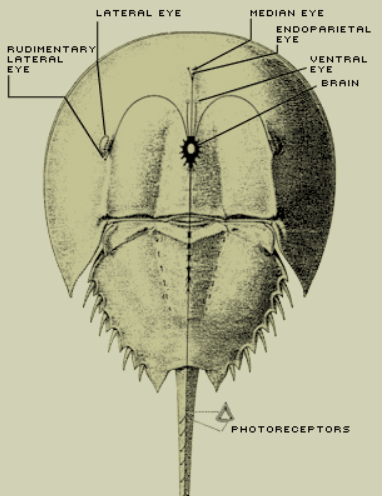
Diagram labelling all ten eyes of the horseshoe crab. Retrieved from the Ecological Research and Development Group (ERDG).
Night 2:
The night of the full moon. We noted a lot of red and green seaweed along the shoreline and found four dead horseshoe crabs on the beach. We counted 279 total horseshoe crabs, tagged 10, and had 5 tag recoveries! One of the horseshoe crabs that were tagged this night had a gash on its carapace, indicative of a potential propeller strike.
Please remember that tag recoveries are important for the management of this species, as it helps inform migration patterns of horseshoe crabs. This type of monitoring is reliant on the community to report these tags; if you see a horseshoe crab with a tag, please report it to the US Fish & Wildlife Service!
Night 3:
Two nights after the full moon. The water was very calm, and we noted that there was still a lot of red and green seaweed along the shoreline. We also saw one black skimmer skimming the water’s surface for food and the same black-crowned night heron was perched at the beach.
Summary:
This cycle we tagged 25 horseshoe crabs bringing the total up to 100 for this year. We had 5 tag recoveries for this cycle.
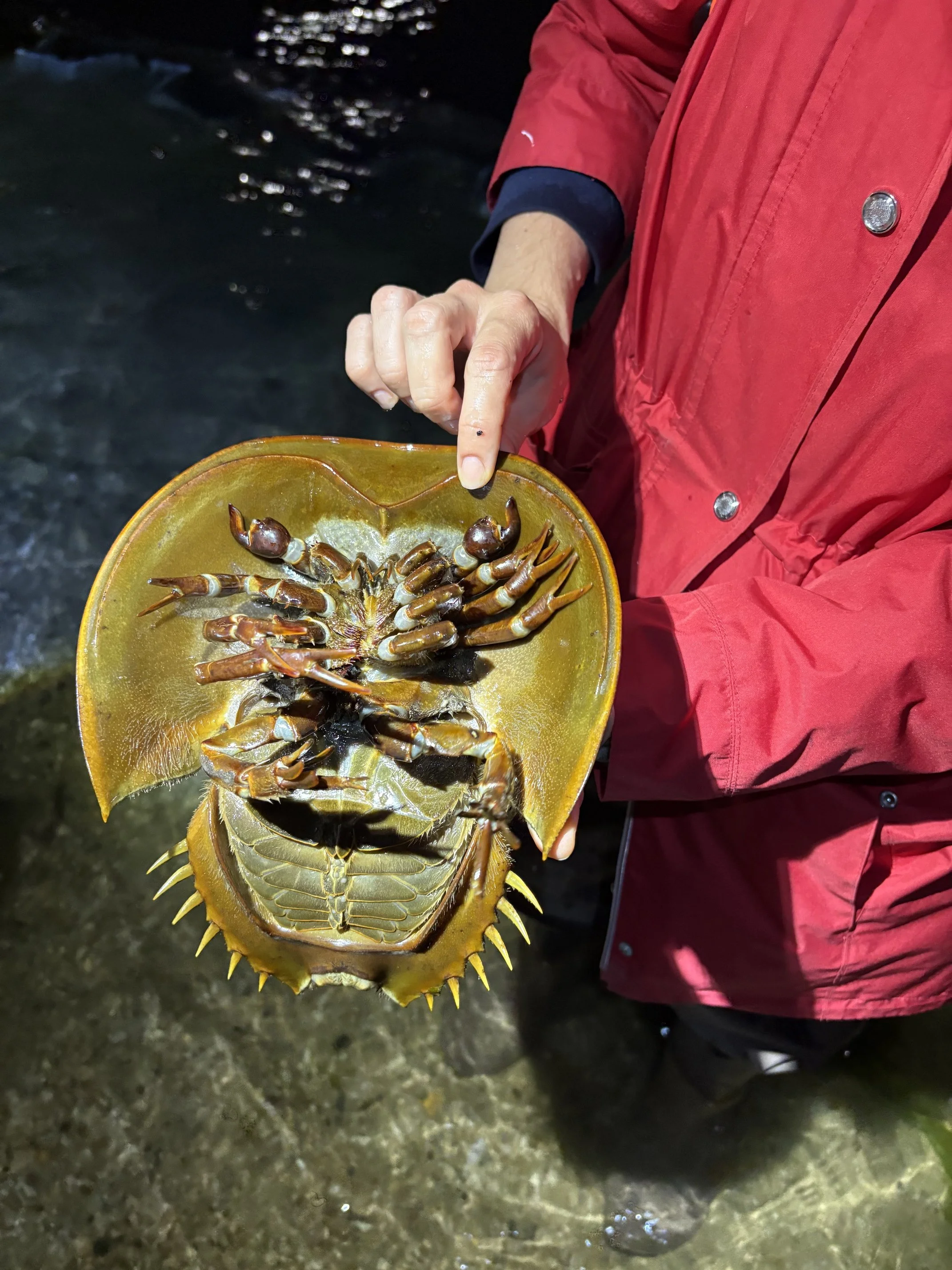
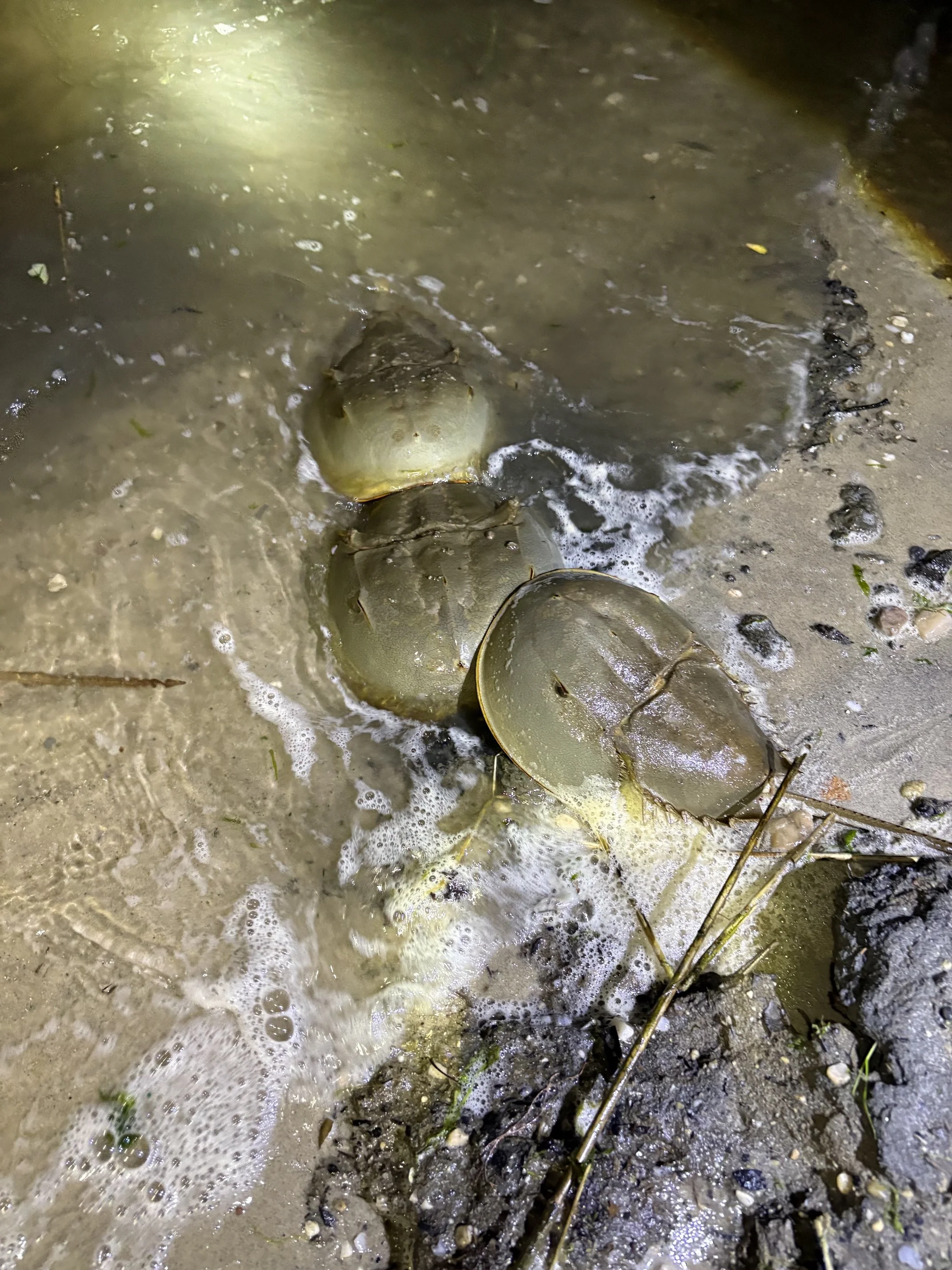
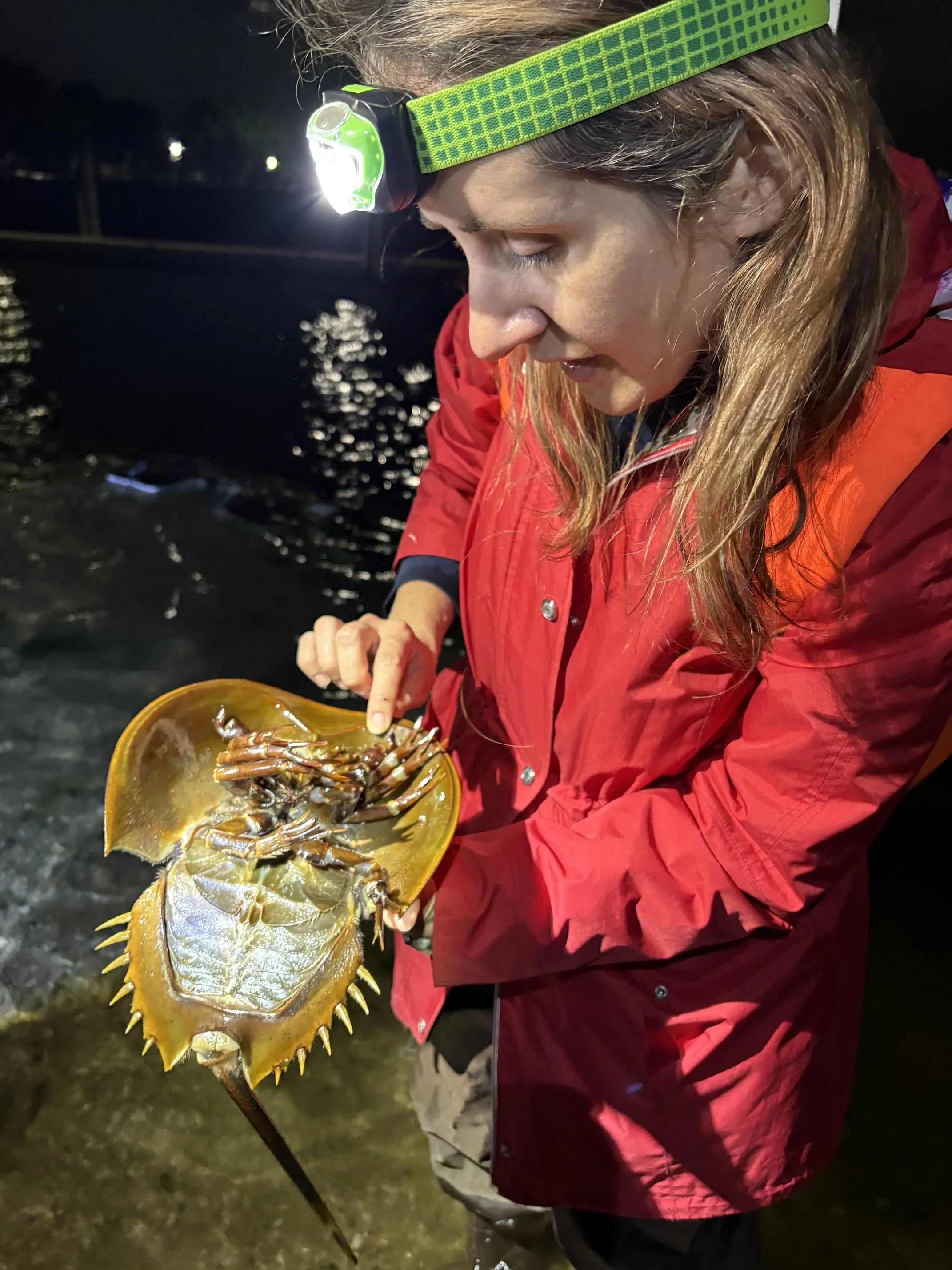

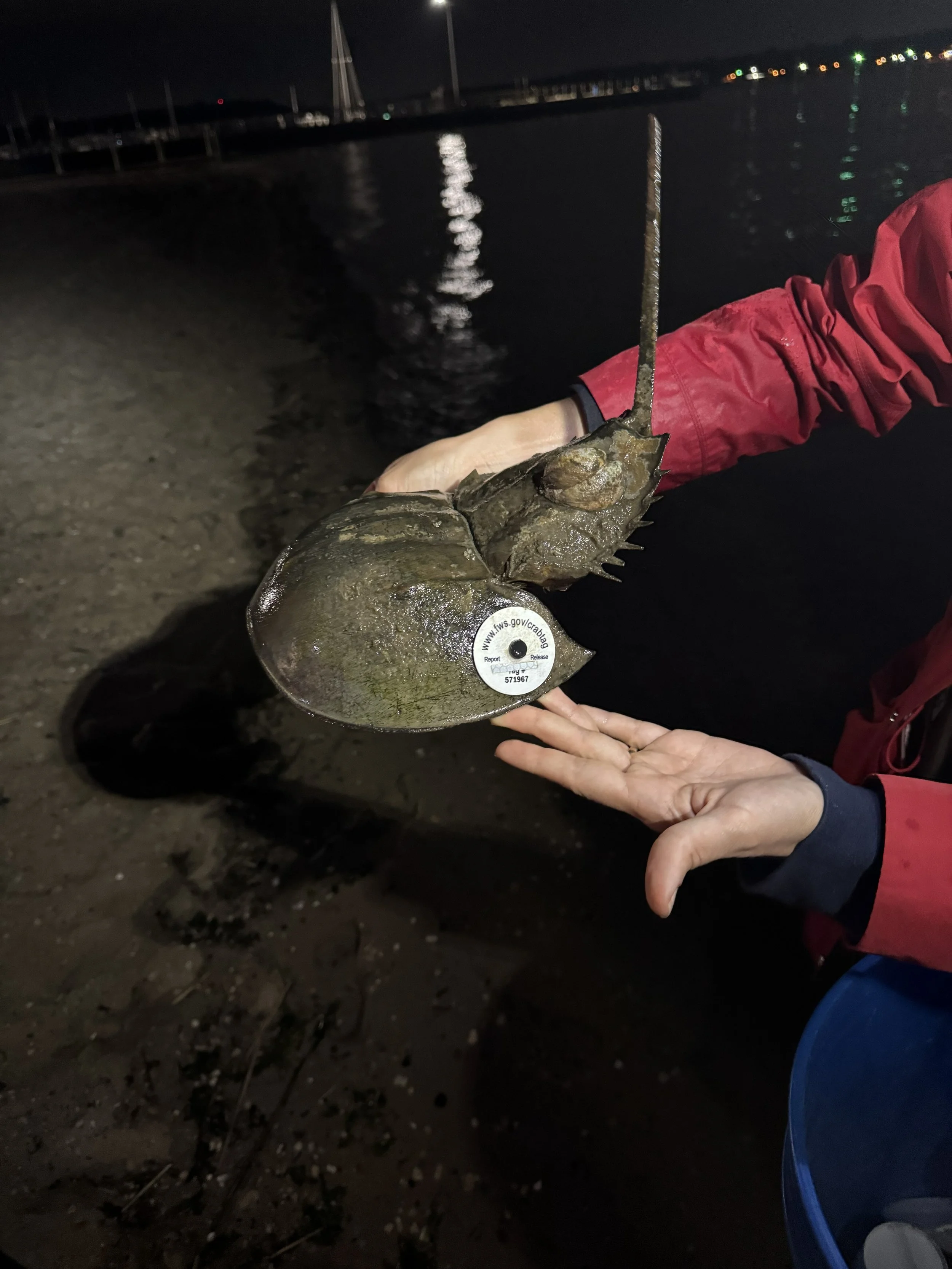
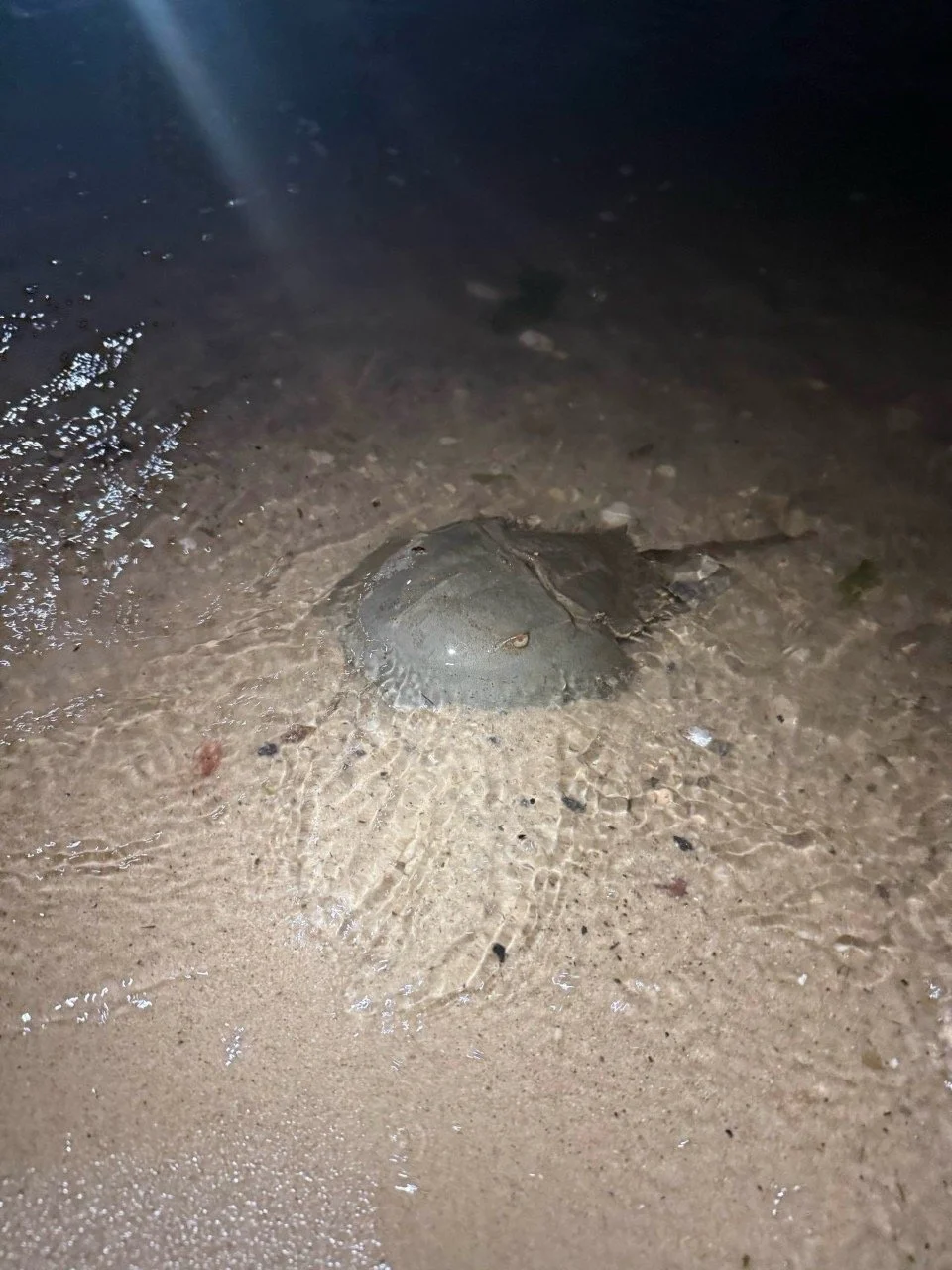
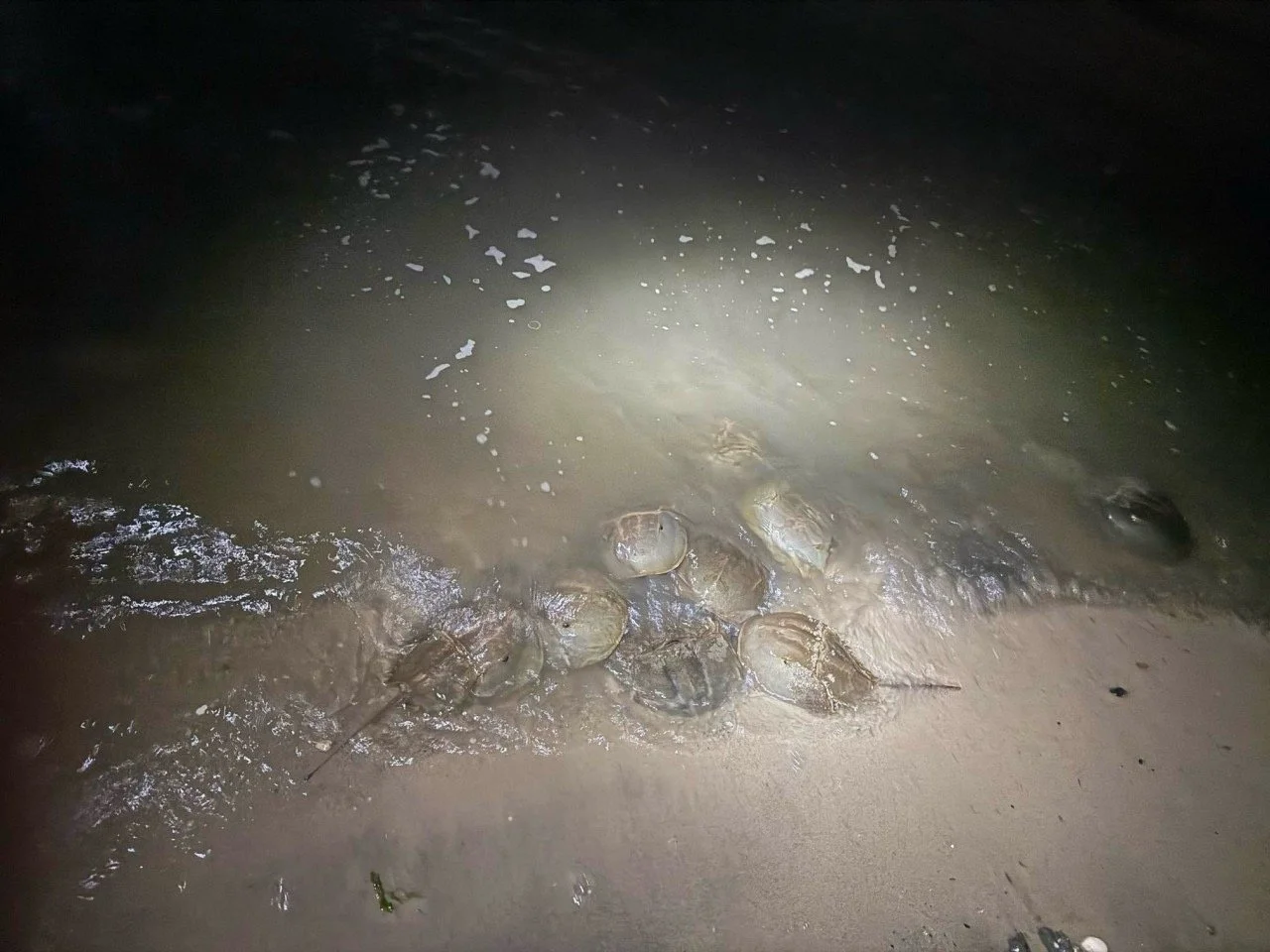
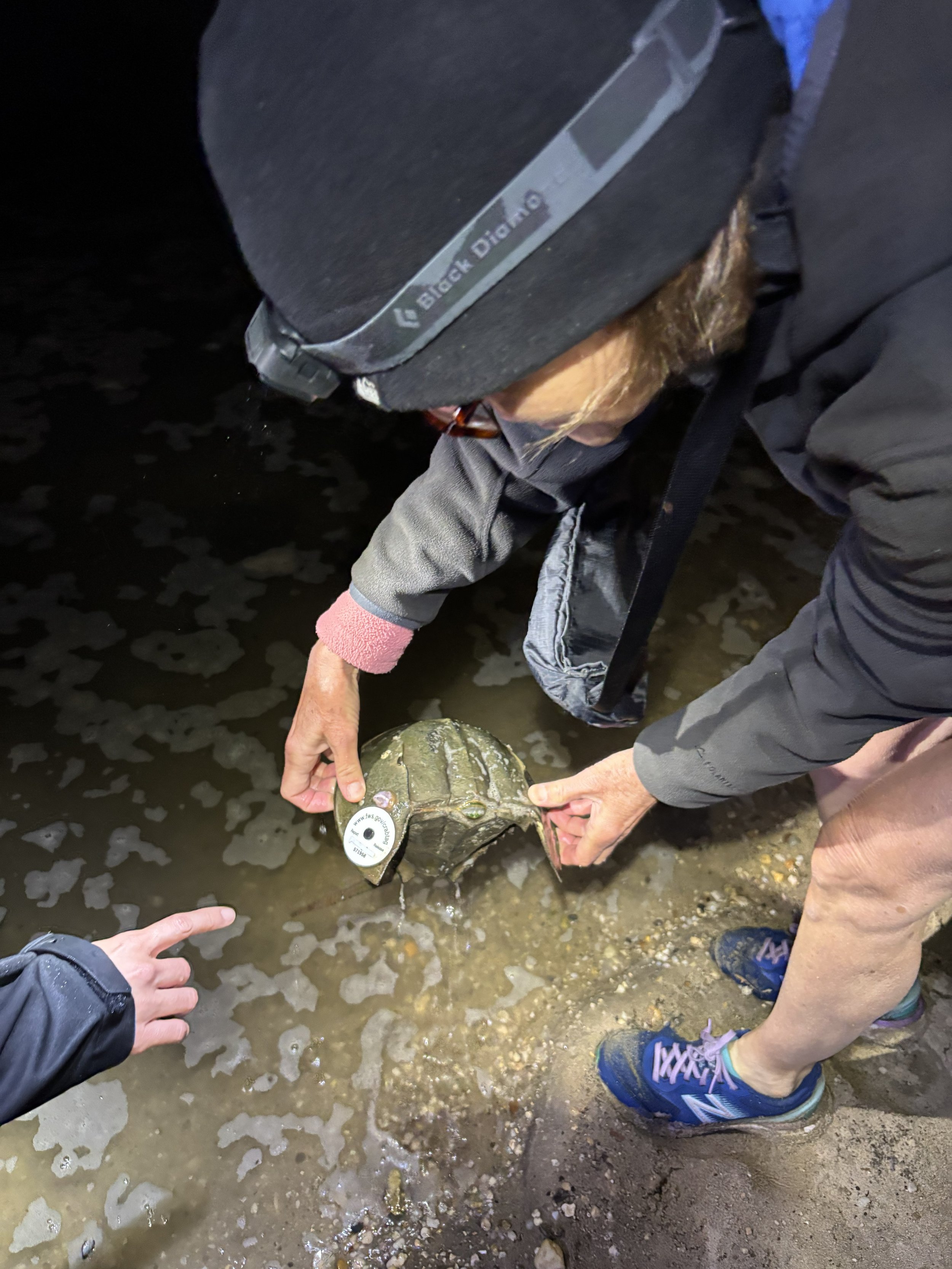
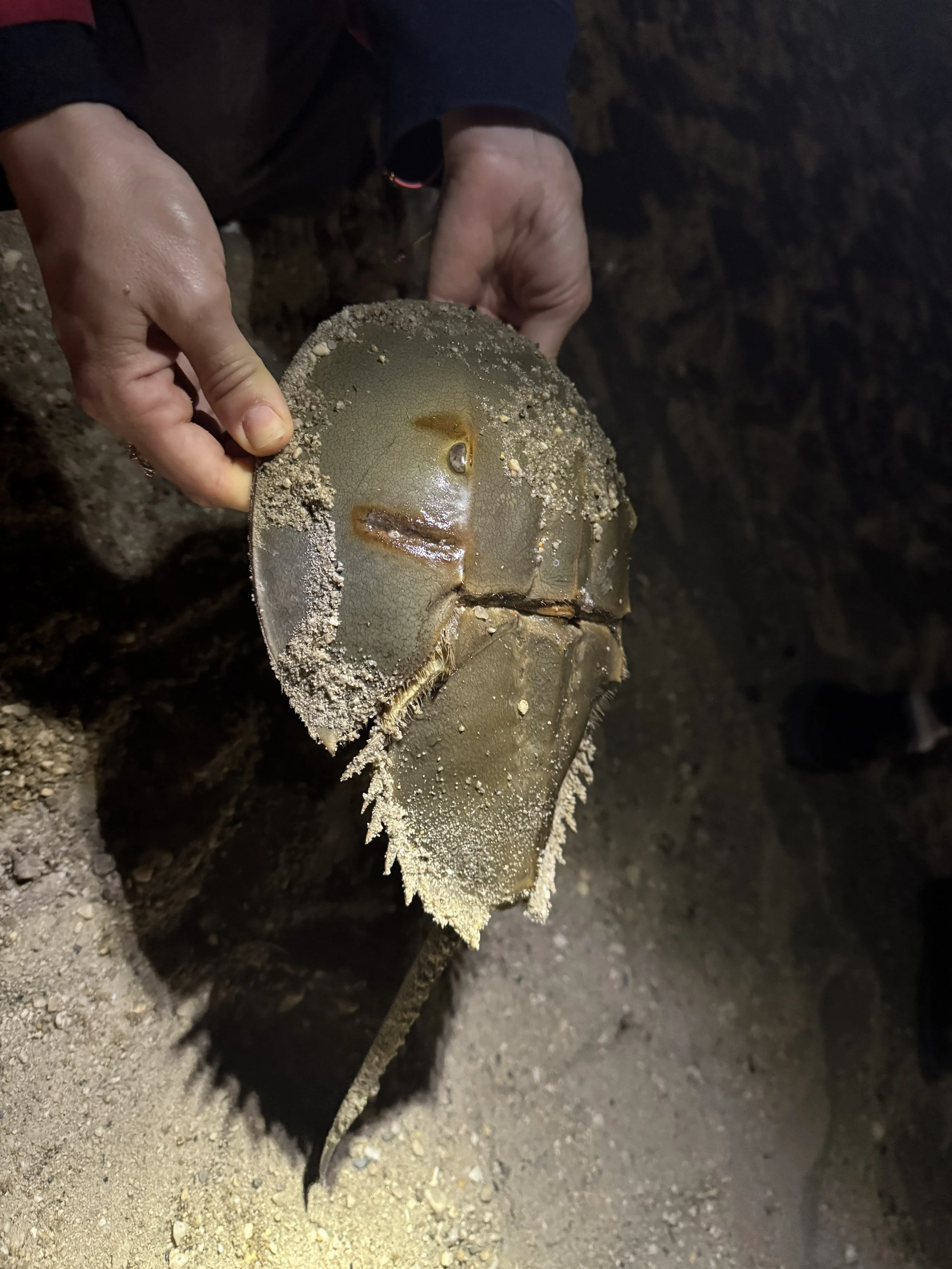
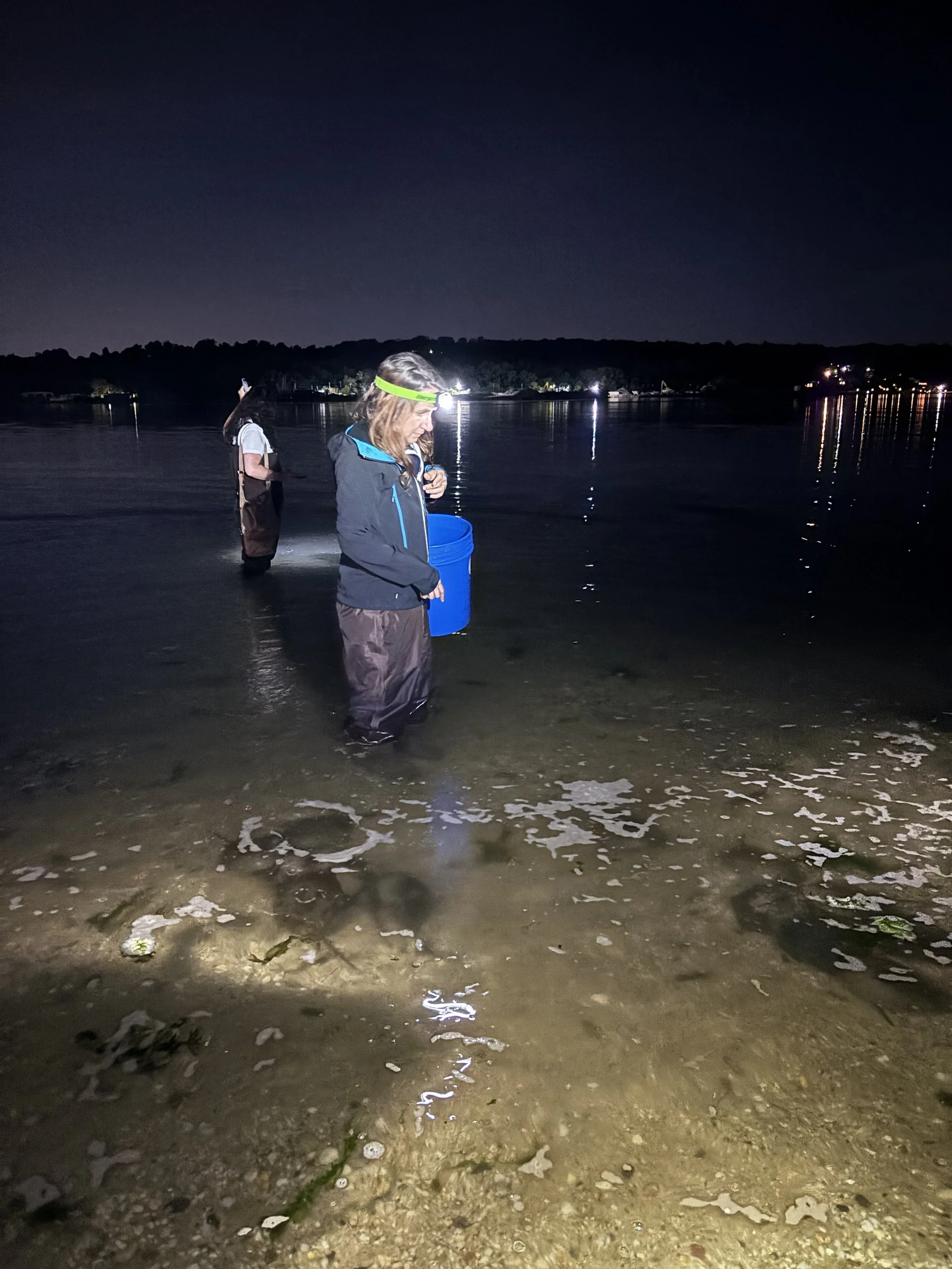
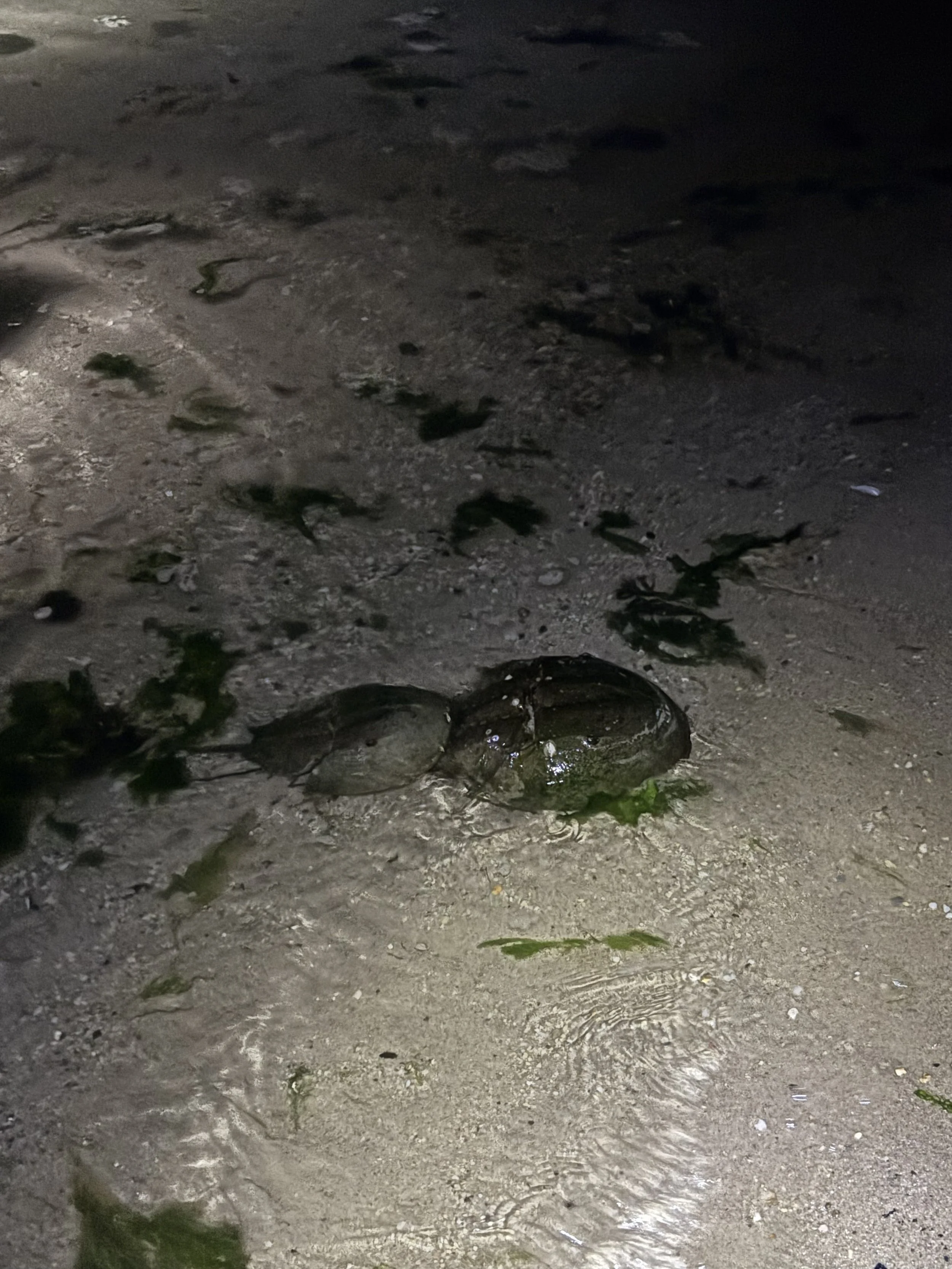
Photo slideshow includes: horseshoe crab underbelly, spawning horseshoe crabs in the “surf zone,” CSA members at the educational event, recovered tagged horseshoe crabs, a horseshoe crab with dents in the shell, CSHH horseshoe crab monitoring crew counting the spawning horseshoe crabs (photos by Kate Bernhard, Michelle Lapinel McAllister, Ella Siasoco, and Sarah Stromski on 5/29/26, 5/30/36, 6/1/26, and 6/3/26)
