CSHH Horseshoe Crab Monitoring Outcomes:
Daytime Education:
CSHH Junior Ambassadors gathered at North Hempstead Beach Park for a hands-on field experience focused on horseshoe crab ecology and population monitoring. During the survey, participants learned how to identify and count horseshoe crabs while observing wildlife in their natural habitat. Highlights included spotting a mating pair of horseshoe crabs, providing an opportunity to discuss the biological differences between males and females and the species’ unique reproductive behavior.
Along the shoreline, we encountered numerous lion’s mane jellyfish along the water’s edge and observed the carcass of a 12-inch diamondback terrapin, sparking conversations about the diverse marine and coastal life that shares this ecosystem. Seeing a live horseshoe crab pair up close helped bring these lessons to life, giving the Junior Ambassadors a memorable firsthand look at one of the region’s most fascinating and ancient species.
Night 1:
Monitoring surveys began two nights before the new moon. This was a later start compared with the previous year, so we were curious to see when the “peak” would be. We saw only 30 horseshoe crabs during the first survey, and we were able to deploy 11 tags. We saw a black-crowned night heron perched on the seawall keeping a watchful eye on the beach.
Night 2:
The night of the new moon. Horseshoe crab activity started ramping up a bit more during this survey. We counted 116 horseshoe crabs, all fully submerged in the water, and deployed 44 tags! One of the horseshoe crabs had a dent in its shell.
Night 3:
Two nights after the new moon. We counted a total of 245 horseshoe crabs, and more of them made their way up to the “surf zone.” We deployed 20 tags, and had 9 tag recoveries! All recovered tags were from Night 2 of this cycle.
“Recovered tags” refer to the retrieval and reporting of tags that were previously released. Tag recoveries are important for the management of this species, as it helps inform migration patterns of horseshoe crabs. This type of monitoring is reliant on the community to report these tags; if you see a horseshoe crab with a tag, please report it to the US Fish & Wildlife Service.
On this night we saw one horseshoe crab with a crushed shell and two horseshoe crabs with deep scarring perhaps from some kind of motorized propeller. We observed mud snail eggs along the shoreline. We also saw two moon jellies, something we hadn’t seen in the harbor since 2017!
Summary:
During the first cycle, we tagged a total of 75 horseshoe crabs. Last year, we put out that many tags throughout the entire monitoring season across all four cycles. We had 9 tag recoveries while monitoring.
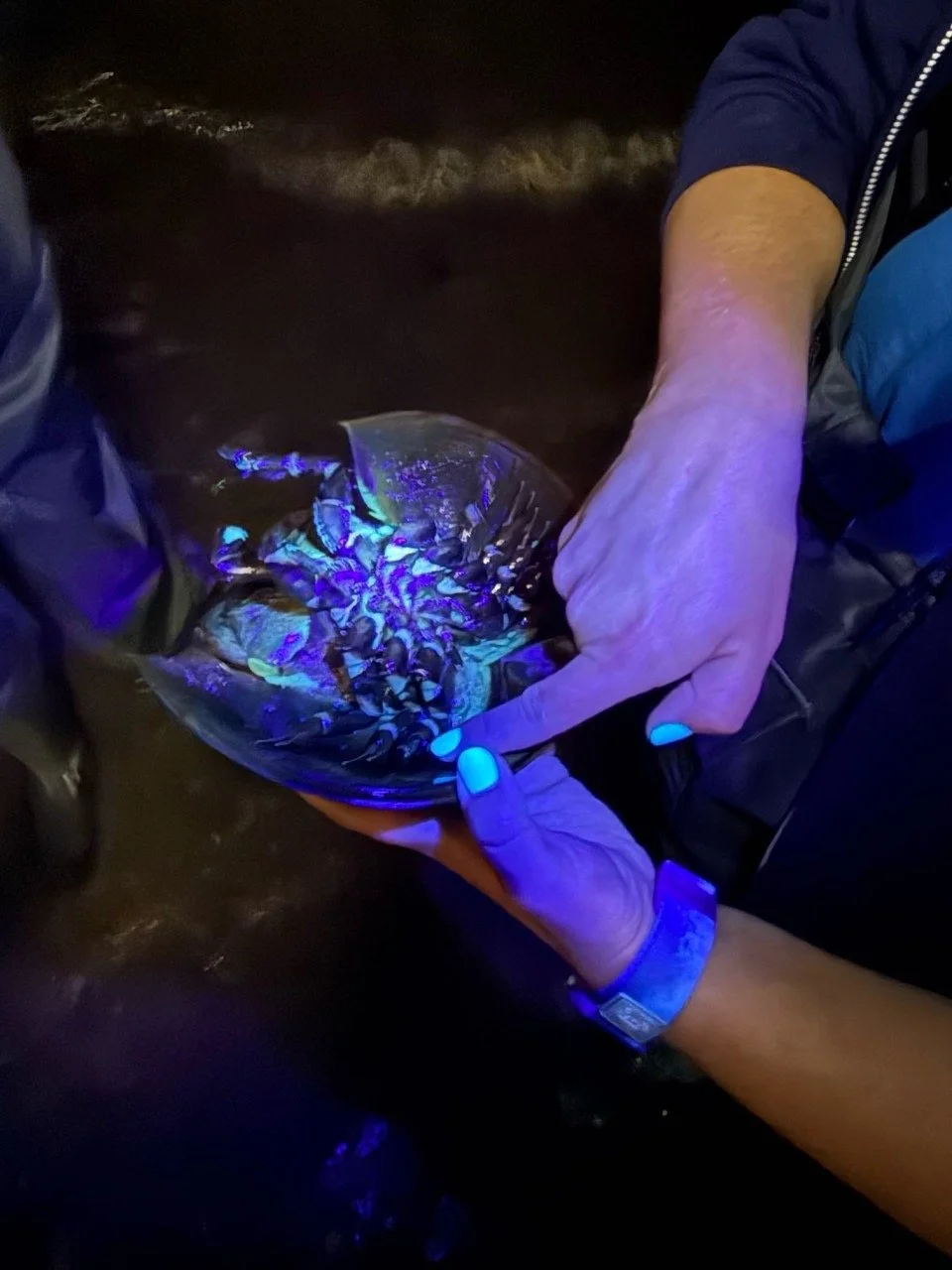
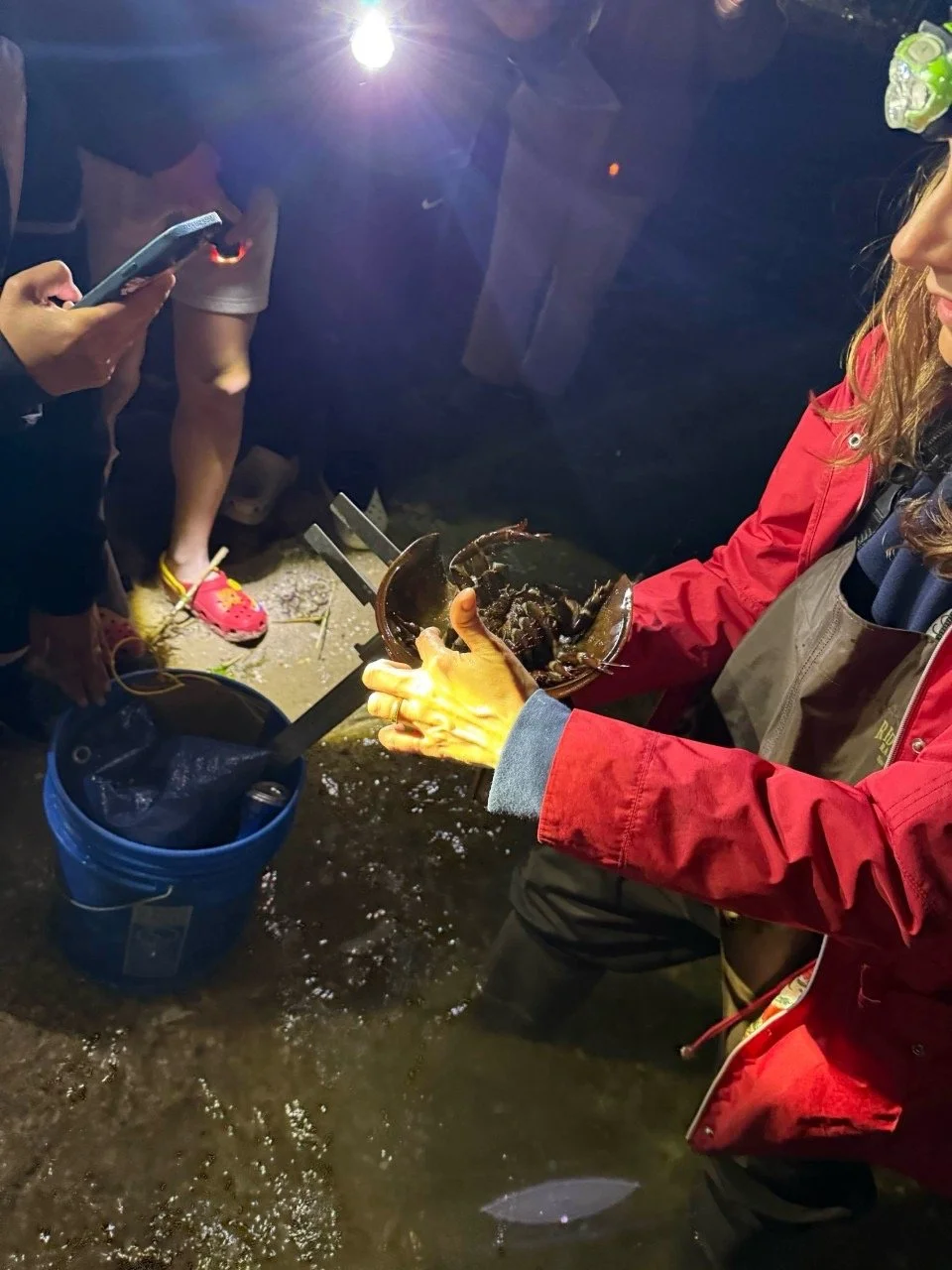
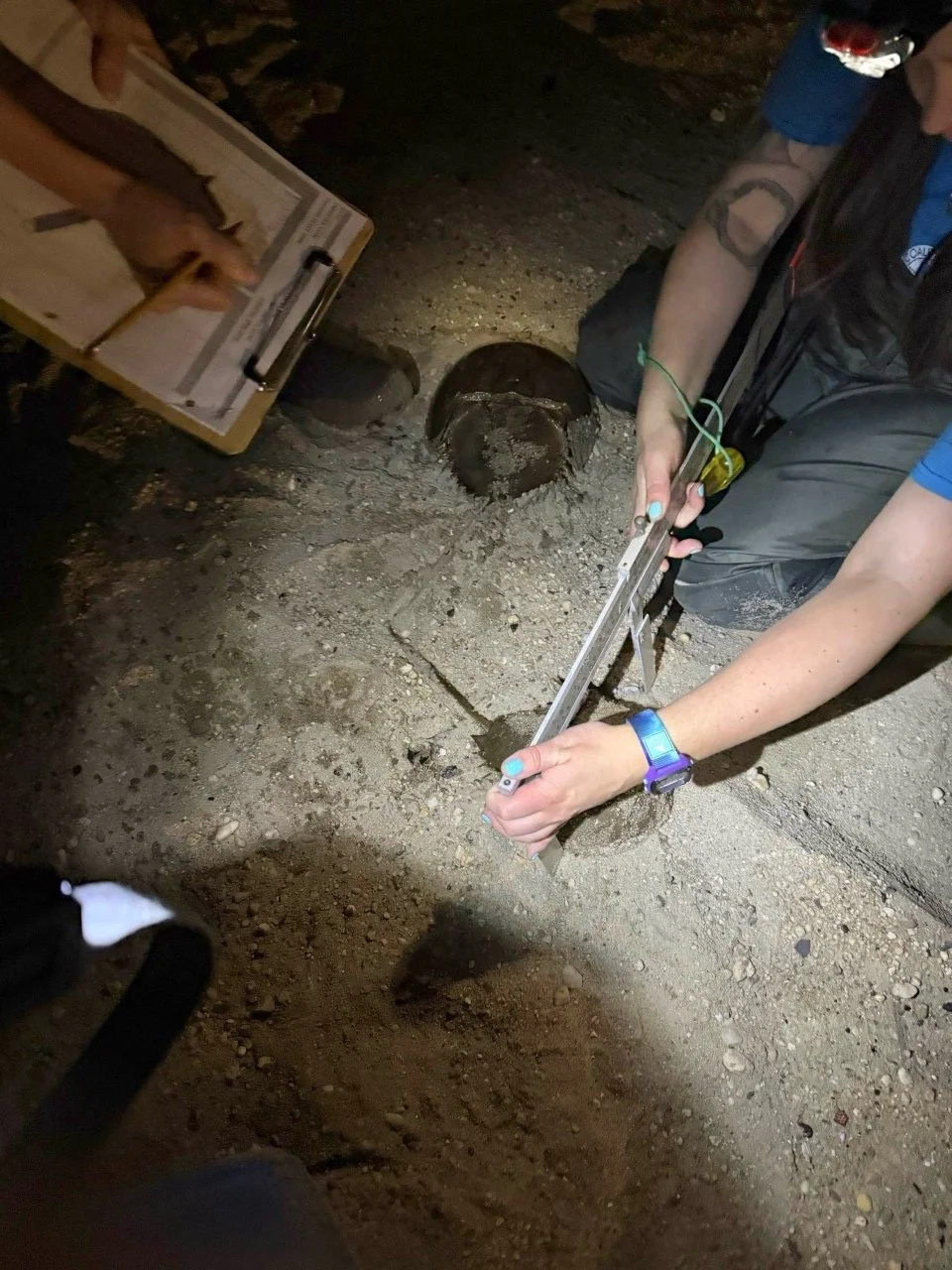
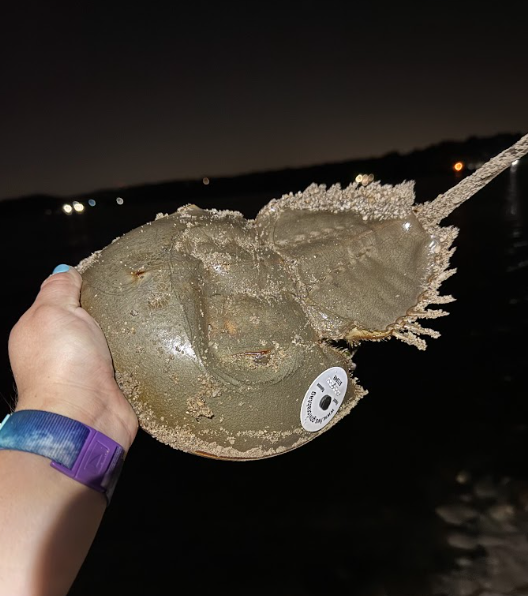

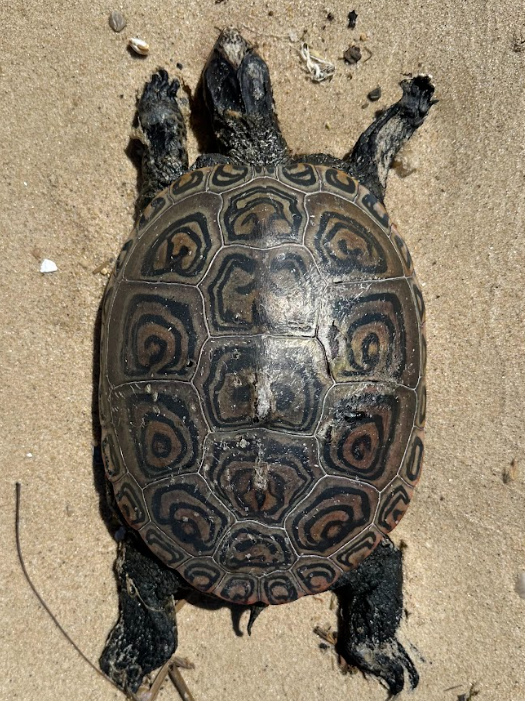
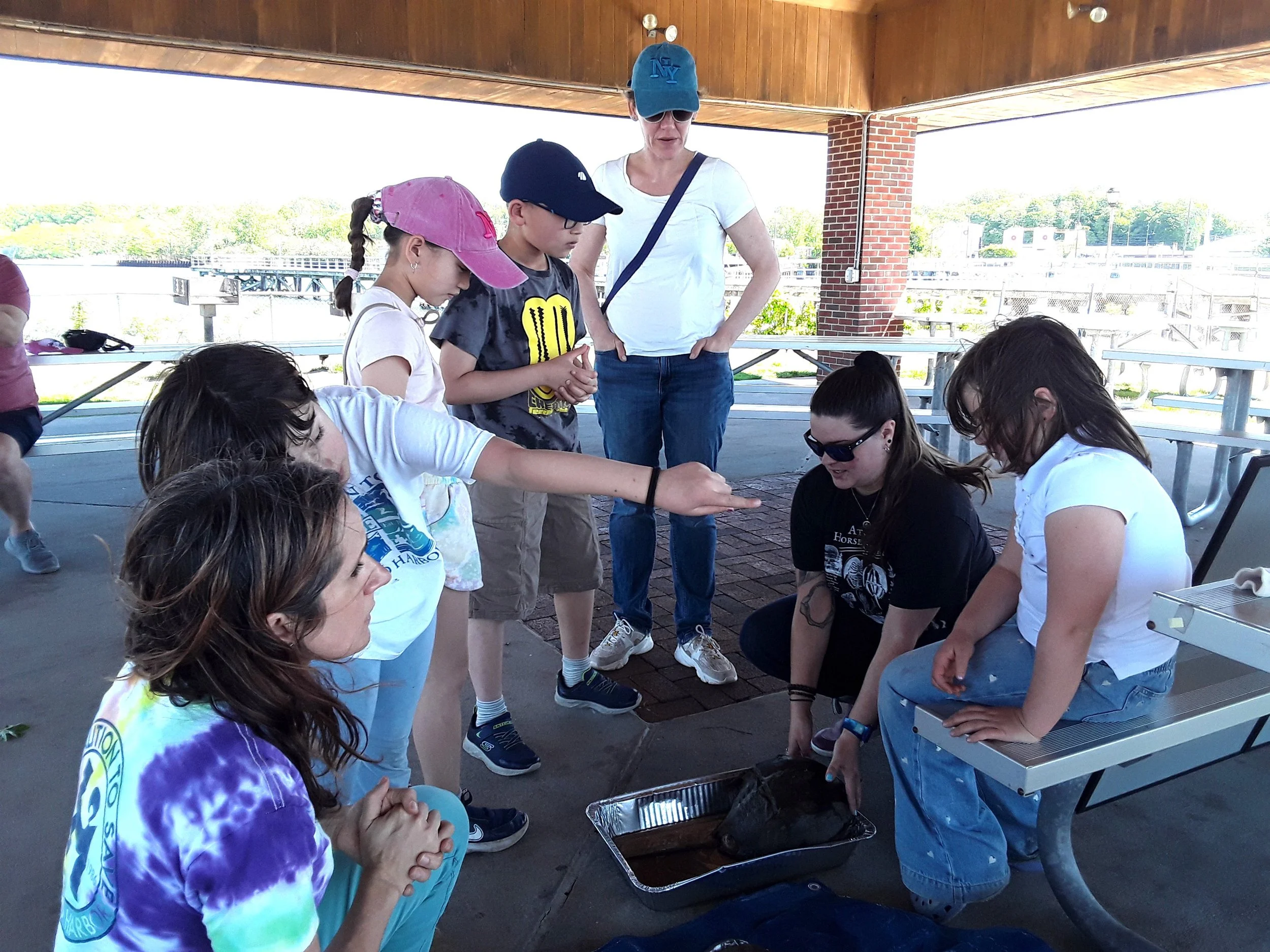
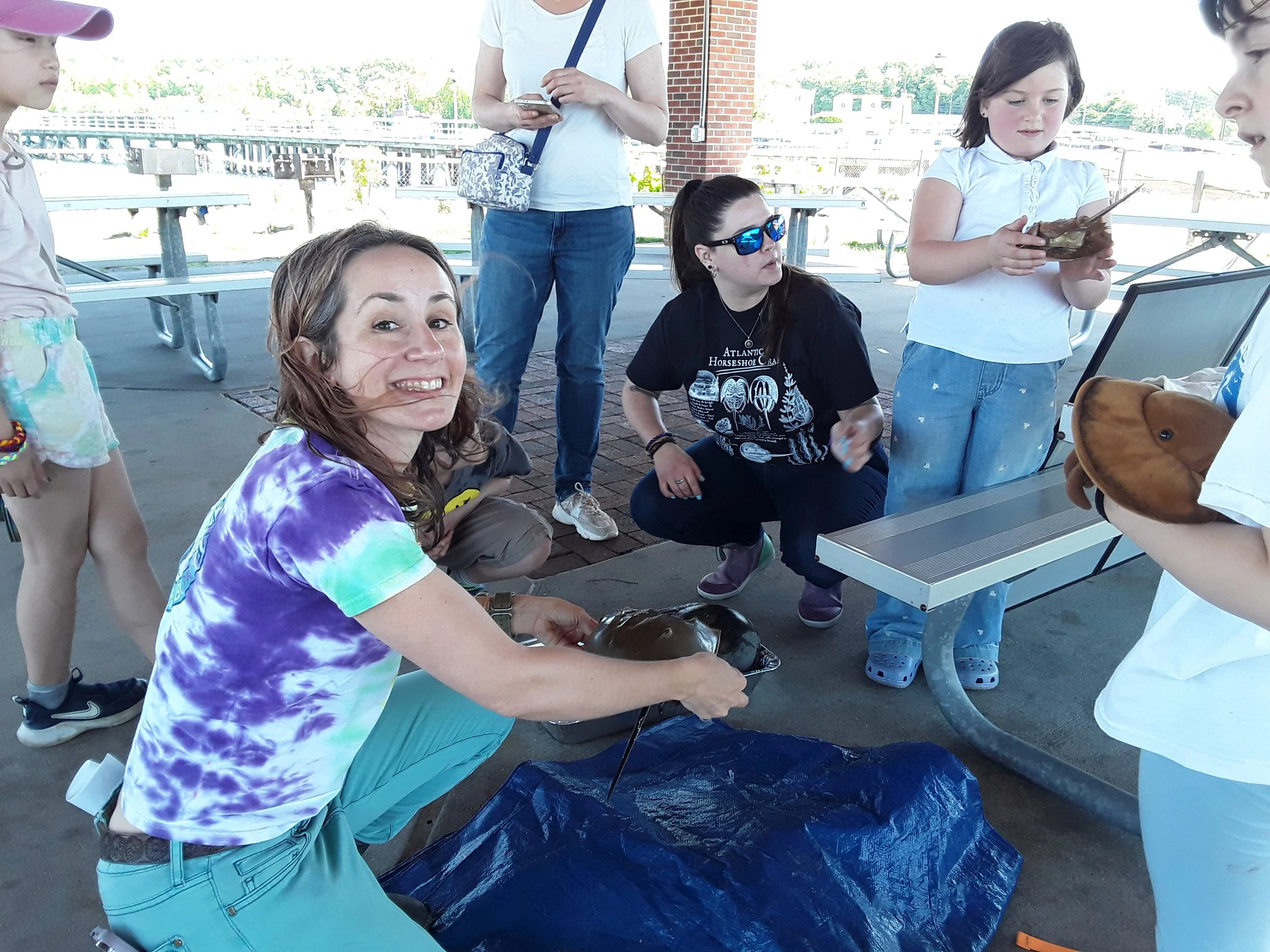
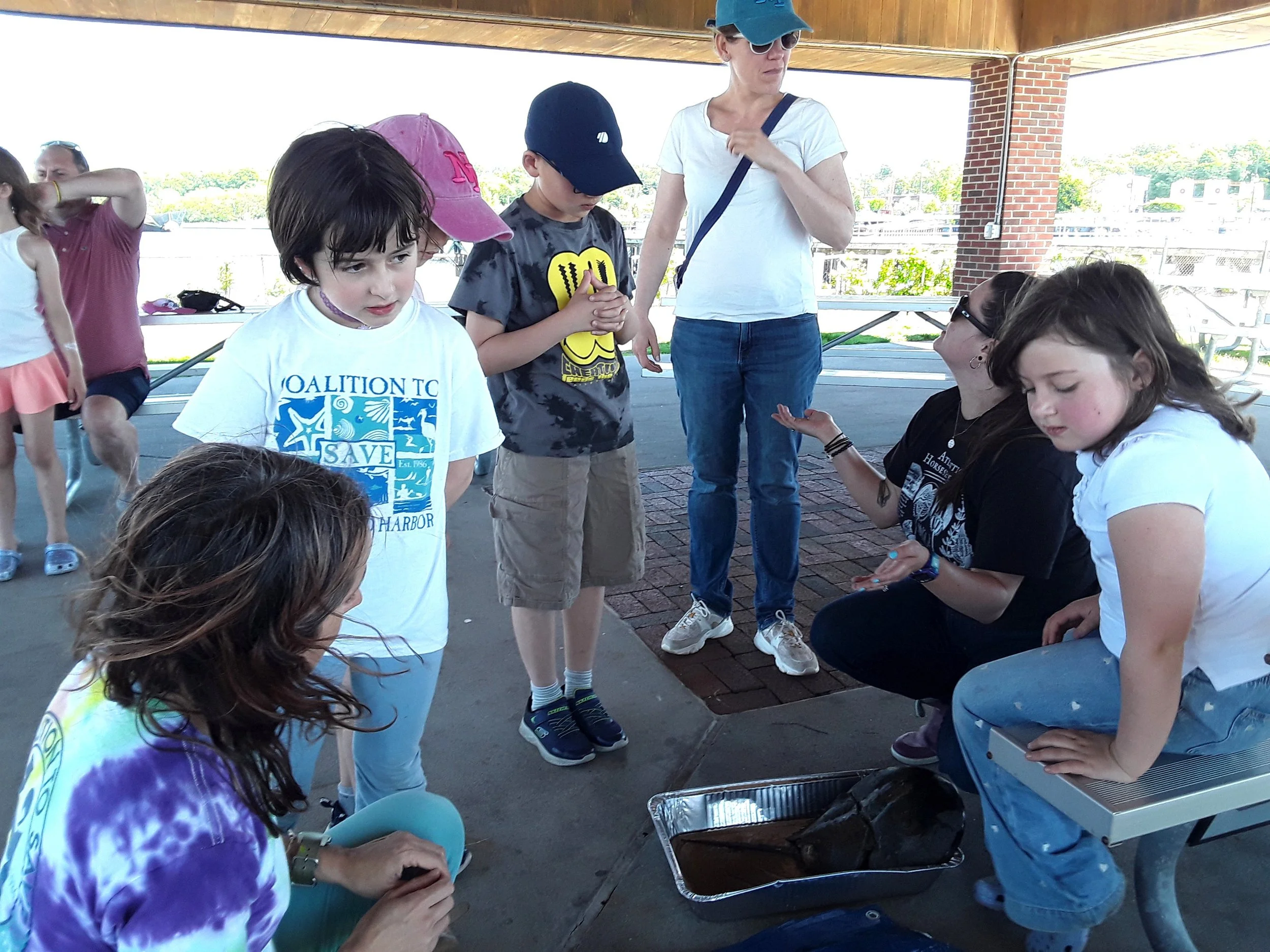
Photo slideshow incudes: horseshoe crab underbellies, measuring horseshoe crabs, a horseshoe crab with a dent in its shell, two “recovered” horseshoe crabs with tags, diamondback terrapin carcass, and photos from the CJA educational event (photos by Carol DiPaolo, Sam Grella, Michelle Lapinel McAllister, and Sarah Stromski on 5/14/26, 5/16/26, and 5/19/26)
