

CSHH Horseshoe Crab Monitoring Outcomes
Night 1:
Two nights before the new moon. We counted 65 horseshoe crabs and tagged 21 on this night. One horseshoe crab that we tagged had a long and crooked tail. We also saw one dead horseshoe crab along the shoreline. This happened to be the night of the NBA Finals viewing party at Tappen Beach, so there was a lot of activity on the beach that could influence horseshoe crab activity.
Night 2:
The night of the new moon. We counted 42 horseshoe crabs and tagged one on this night (the last tag of the season). One horseshoe crab had a hole in its carapace.
Daytime Monitoring:
CSHH monitored for horseshoe crabs along the shoreline at North Hempstead Beach Park during the daytime high tide on the date of the new moon. The water was calm, but there was a lot of garbage along the beach and within the wrack line. We counted a total of 9 live horseshoe crabs, all within the submerged zone, and noted 7 dead horseshoe crabs on the beach. The high tide flooded part of the parking lot.
Night 3:
Two nights after the new moon. We counted 60 horseshoe crabs and saw three dead horseshoe crabs along the shore, but had one tag recovery! We also saw a small fluke in the shallow waters close to the shoreline.
Please remember that tag recoveries are important for the management of this species, as it helps inform migration patterns of horseshoe crabs. This type of monitoring is reliant on the community to report these tags; if you see a horseshoe crab with a tag, please report it to the US Fish & Wildlife Service!
Did you know there are four species of horseshoe crabs worldwide? The species that resides in Long Island waters is the American, or Atlantic, horseshoe crab (Limulus polyphemus). This species is endemic to the entire east coast of the United States, from Maine to the Gulf of Mexico, and is even found around the Yucatan Peninsula in Mexico. The other three species of horseshoe crabs (Tachypleus tridentatus, Carcinoscorpius rotundicauda, and Tachypleus gigas) are found in Asia and India.
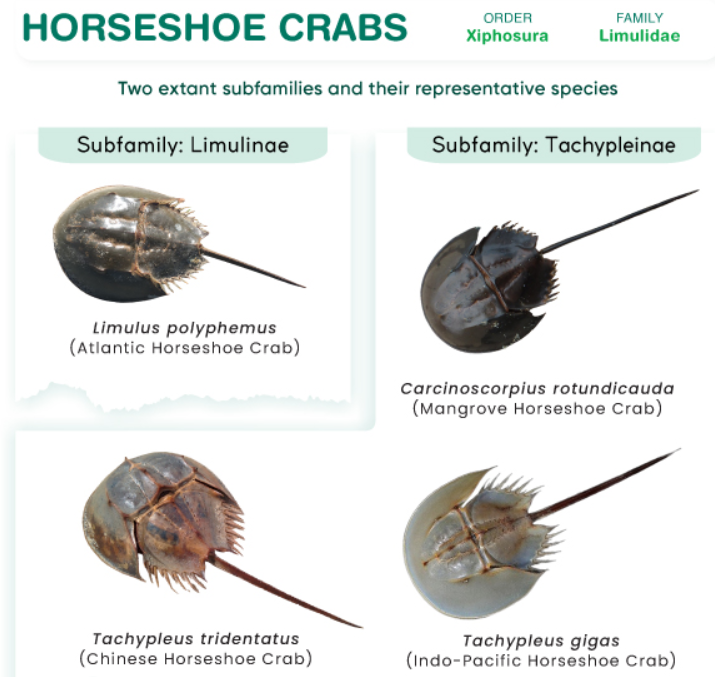
Picture of the four species (two subfamilies) of horseshoe crabs found worldwide. Retrieved from animalfact.com/horseshoe-crabs/
