2026 Sessions Underway
CSHH’s community oyster gardening program is well underway in its fifth season, and the oysters are doing so well and growing quickly thanks to all of our dedicated volunteers!
So far, our biggest measurement across all sites is 4.7 cm, measured at the Hempstead Harbour Club. At the other locations, the biggest measurements so far are as follows:
Sea Cliff Yacht Club – 4.3 cm
Tappen Marina – 3.6 cm
North Hempstead Beach Park – 3.5 cm
There have been many different marine animals in and around the cages, including an American eel (elver phase), a northern pipefish, shrimp, crabs, sea squirts, and star tunicates. Of note this year is the absence of skillet fish, and the overwhelming presence of a specific type of shrimp, called the Japanese skeleton shrimp (Caprella mutica). This shrimp is a small marine amphipod crustacean, similar to beach fleas, but it is endemic to eastern Asia, meaning it is an invasive species in Hempstead Harbor.
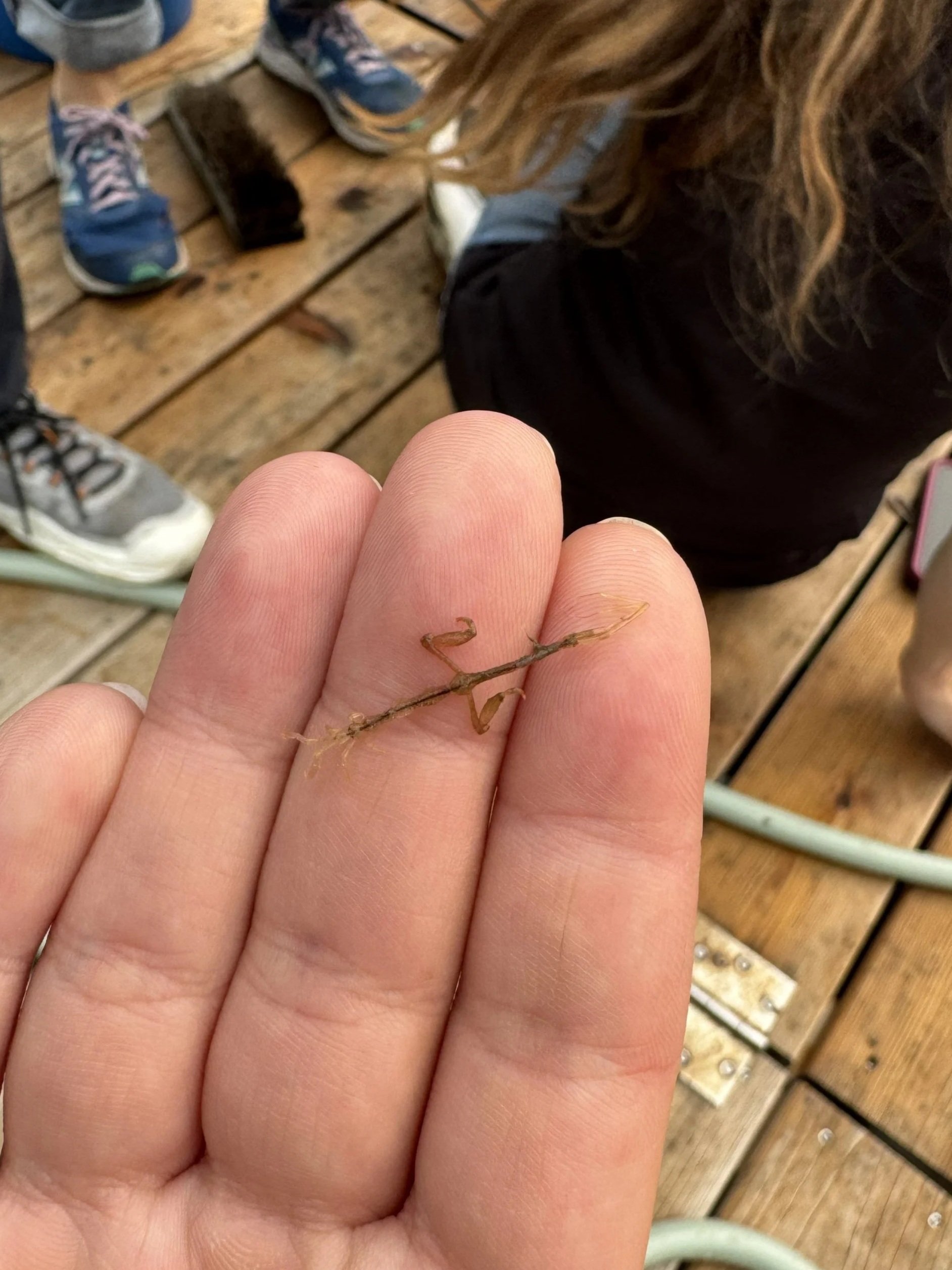
We have observed C. mutica populations around oyster cages starting at the end of last season and throughout this season. This species reproduces very quickly, and since it is invasive here, it likely has little to no natural predators, which further contributes to its population boom. During oyster gardening sessions, volunteers have noticed this shrimp attached to the oysters and cages. This shrimp likes to feed on the biofouling that accumulates on the cages and oysters; and since the cages are floating at the surface, they are likely a refuge for this shrimp as well.
Image left: Japanese skeleton shrimp found in one of the oyster cages (7/16/26 taken by Sarah Stromski)
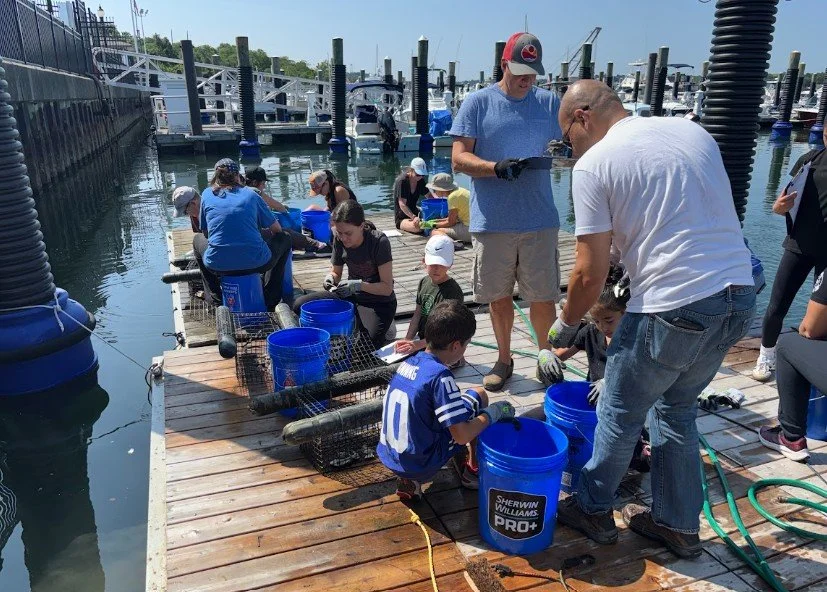
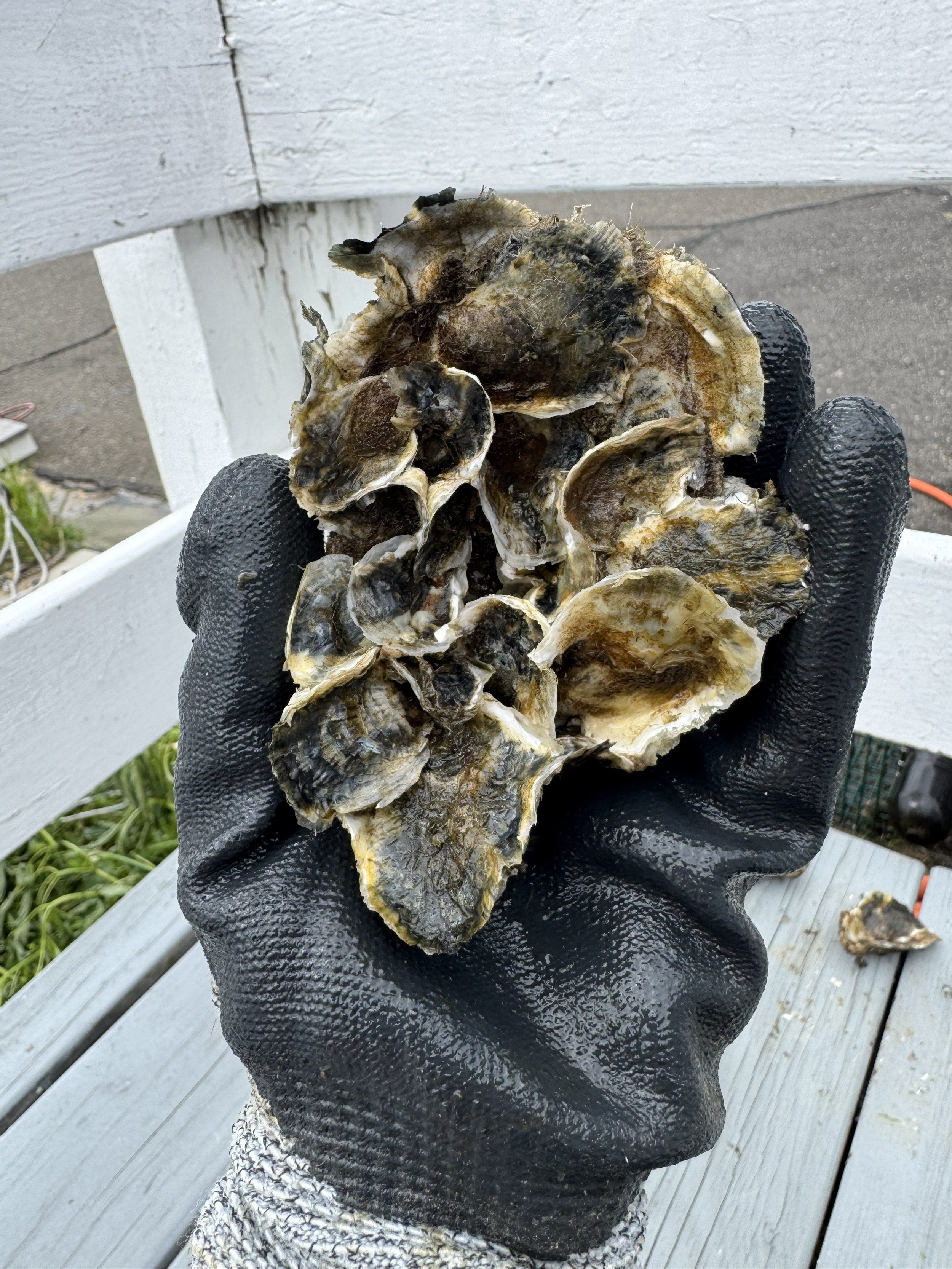
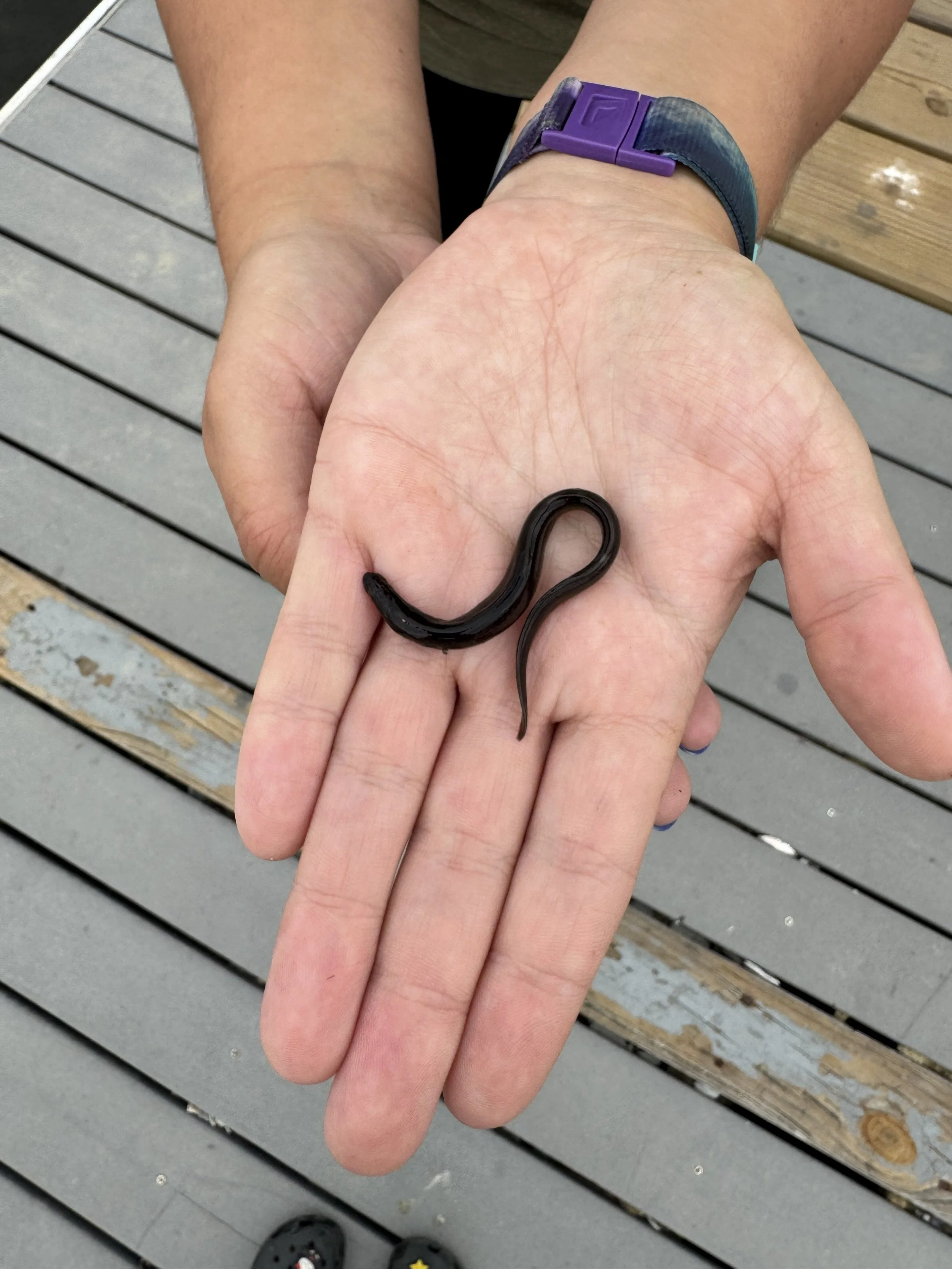
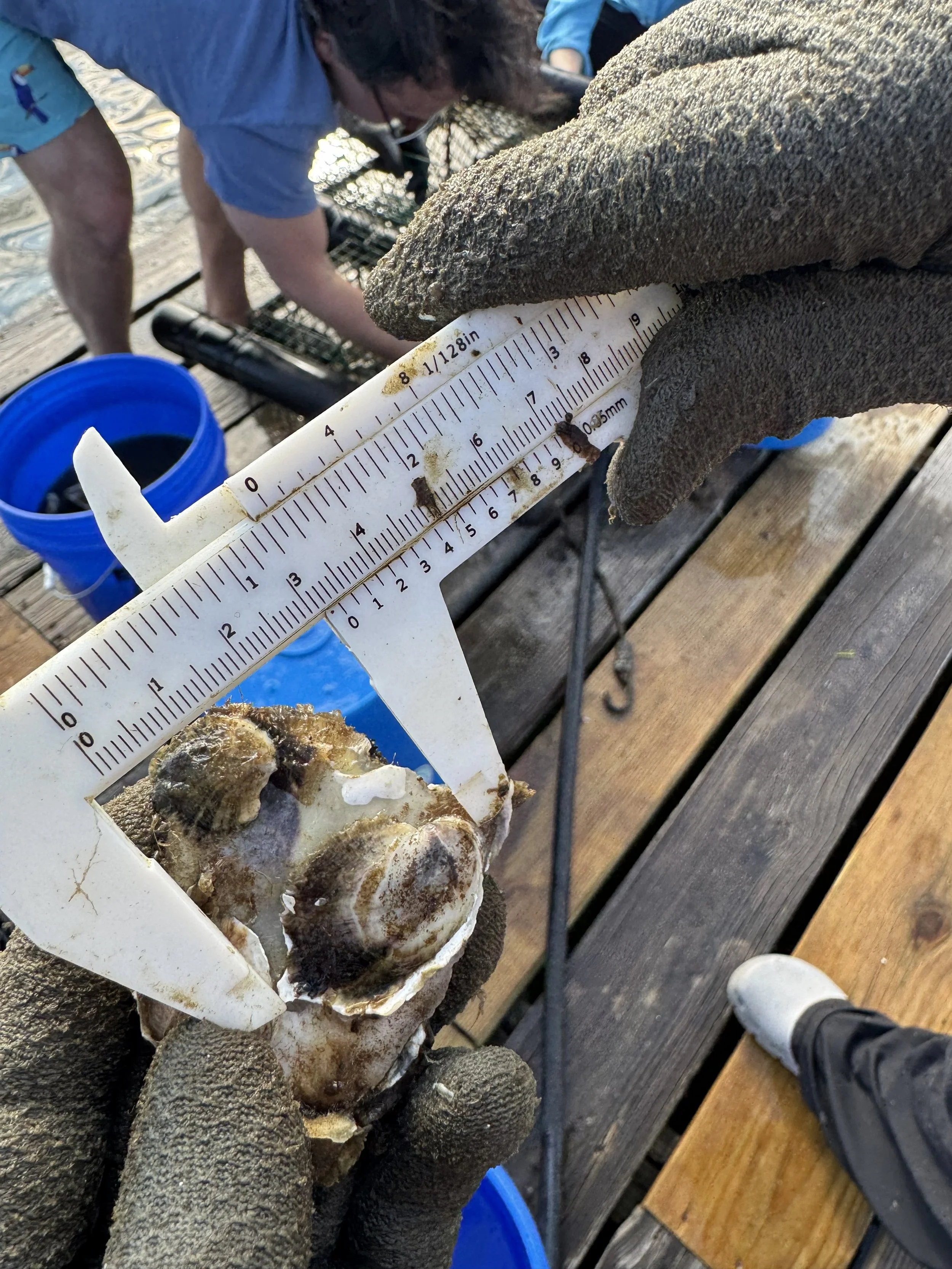
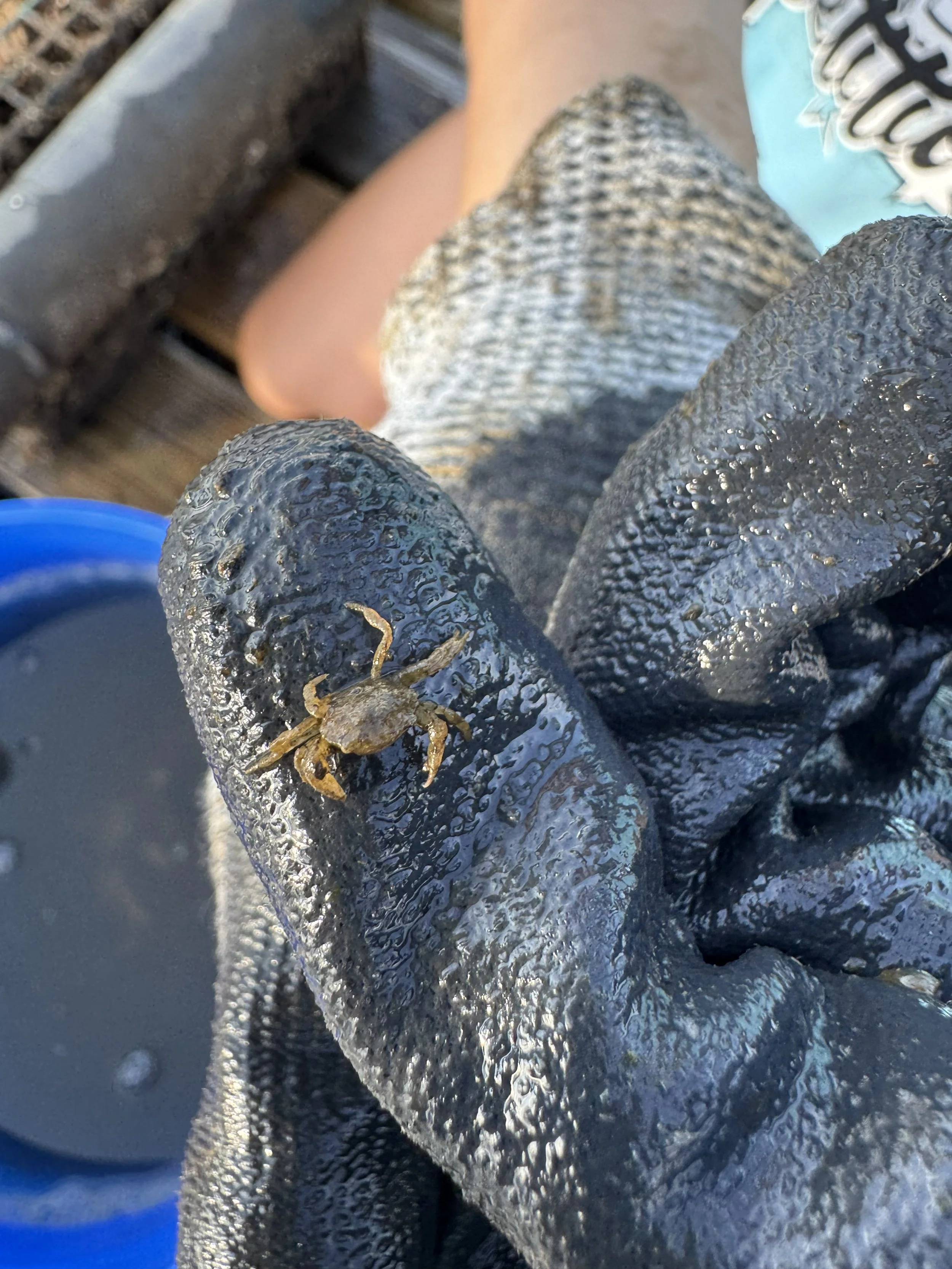
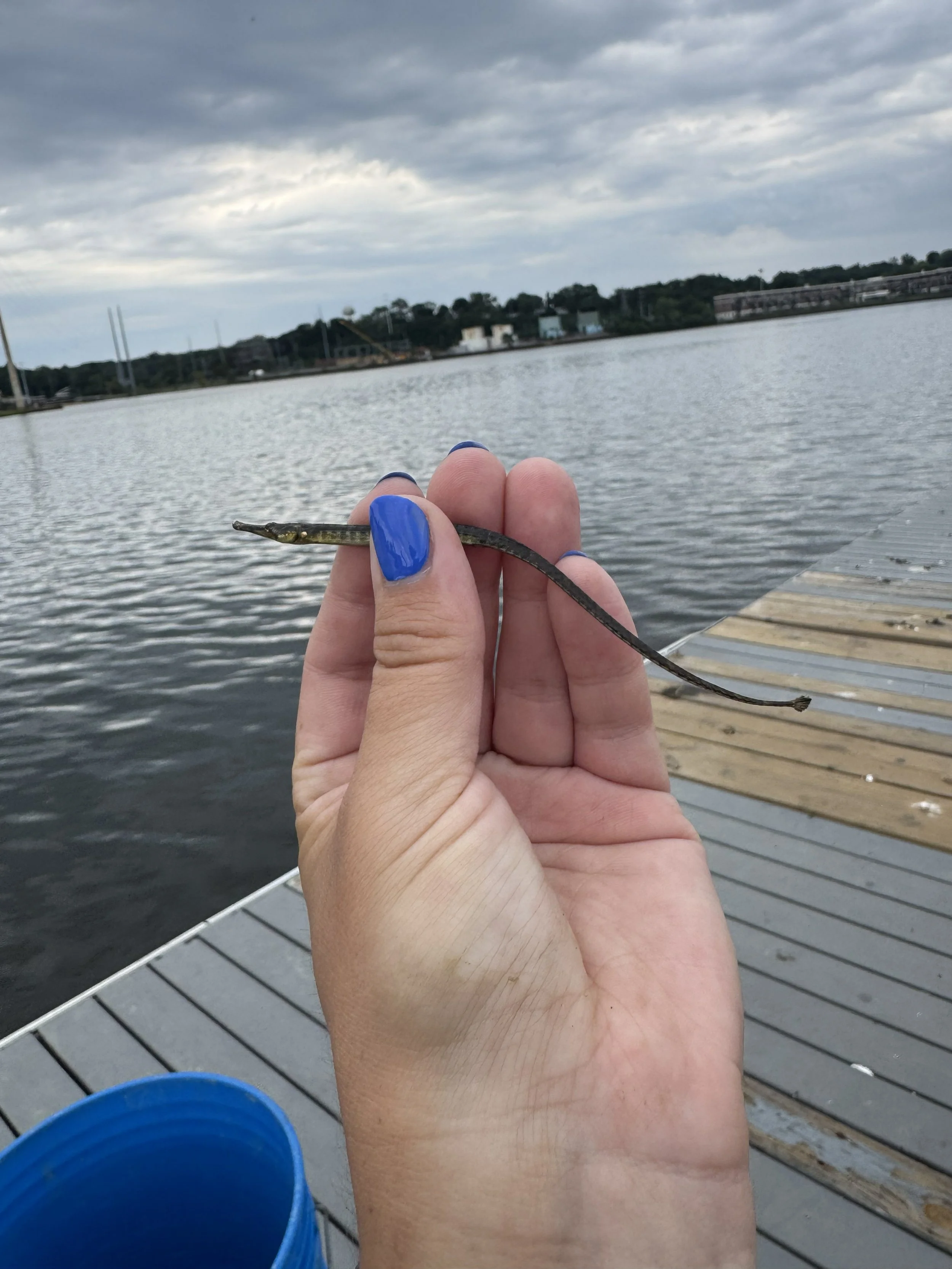
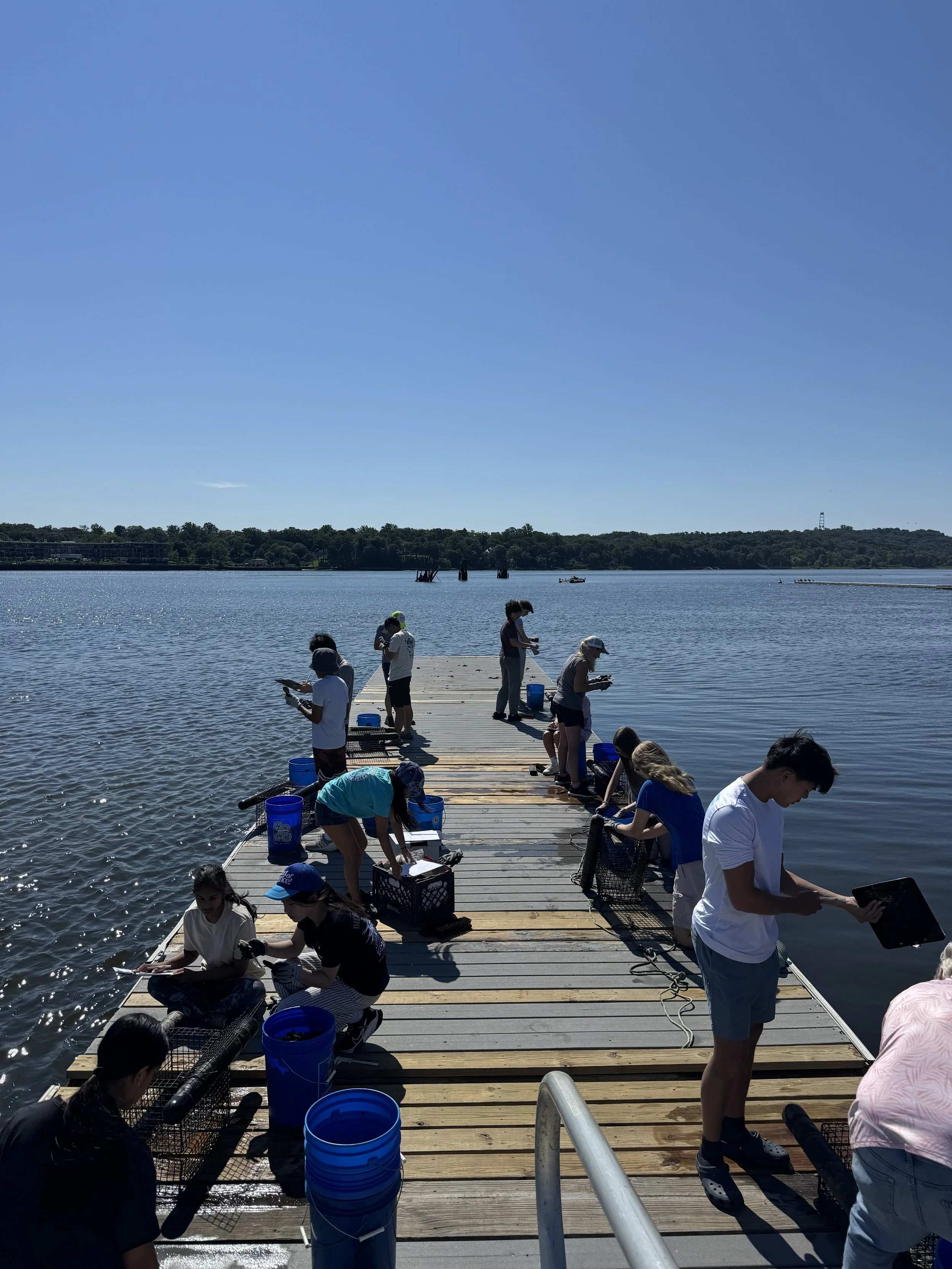
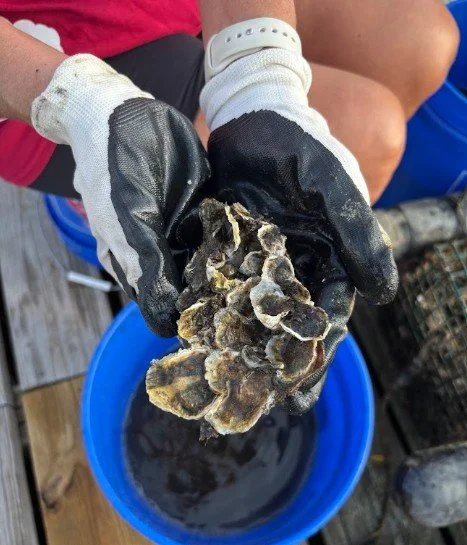
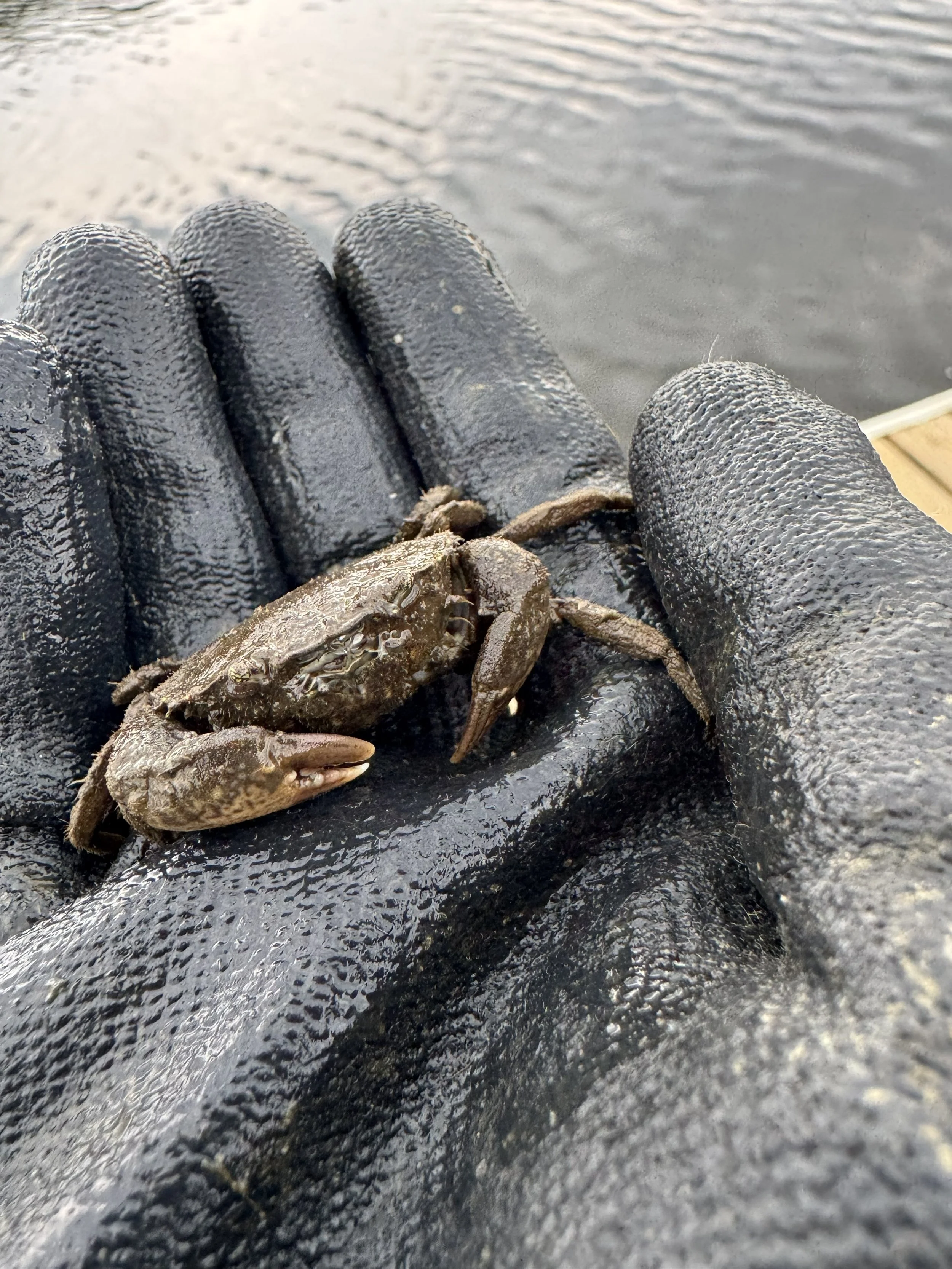
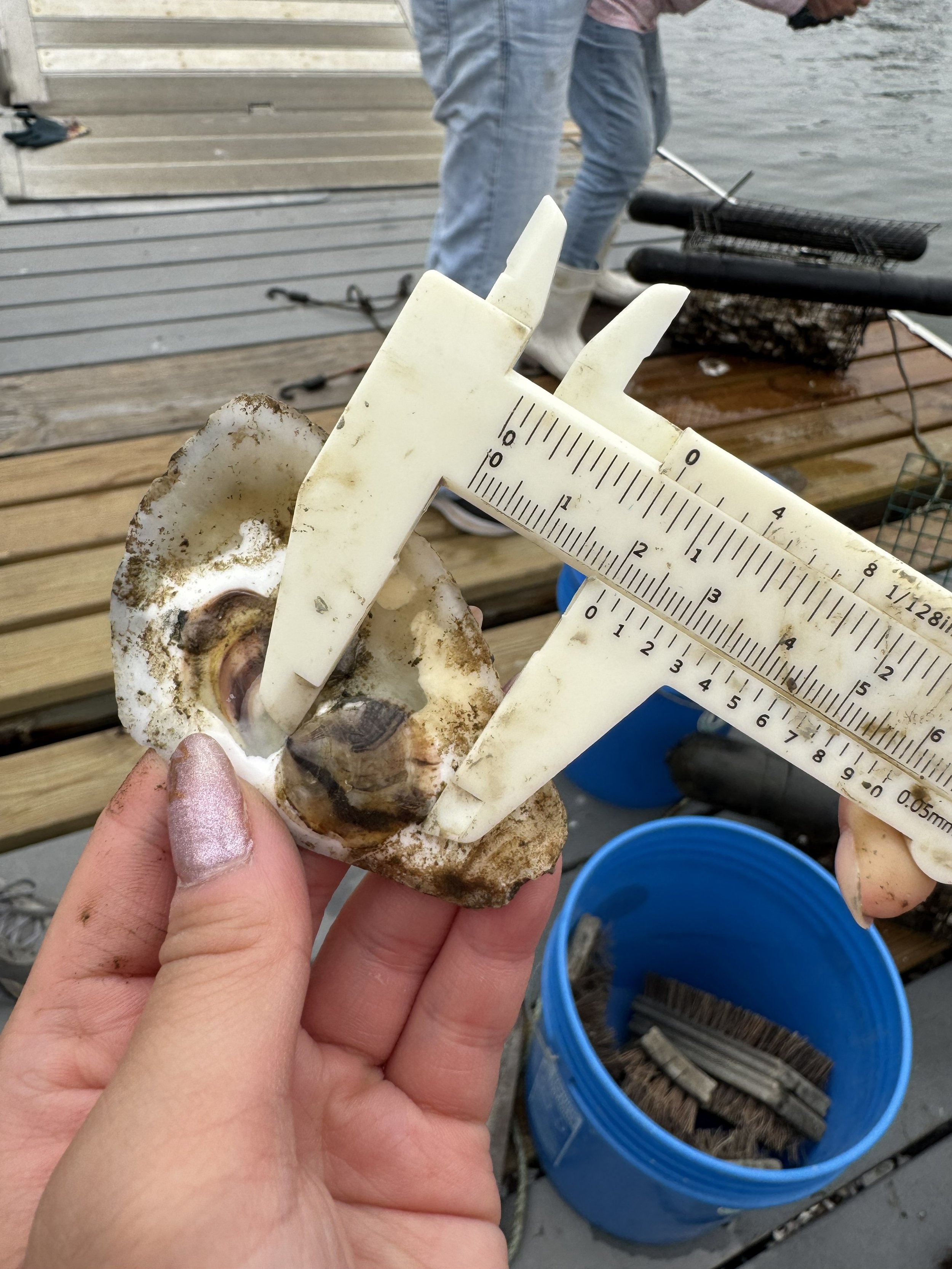
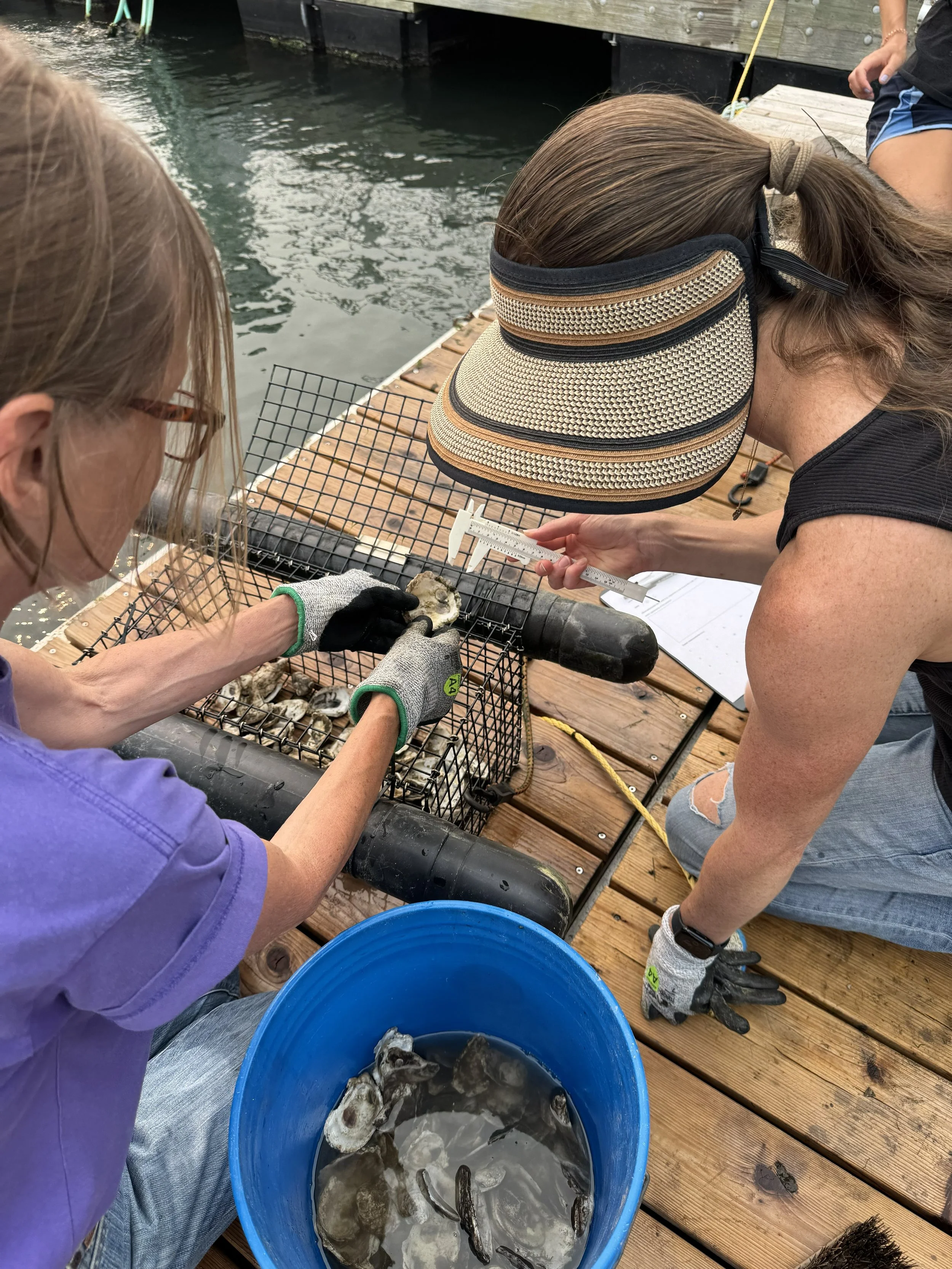
Slideshow above includes: volunteers at Tappen Marina and North Hempstead Beach Park, oyster clusters, juvenile eel, large oyster measurements, juvenile and adult crabs, northern pipefish (photos by Sarah Stromski and Ella Siasoco, during sessions from 7/16/26 to 8/28/26)
